Are You Choosing Table Bases Based on Your Customers — or Your Supplier?
- Share
- publisher
- AEONTI
- Issue Time
- Nov 9,2026
Summary
Should you pick table bases from whatever your supplier has in stock, or from what your customers actually need? This demand-driven sourcing brief answers 17 questions: why catalogs mislead, the real cost of a mismatched table base, what each customer type prioritizes, the $28 vs $31 supplier comparison, custom OEM/ODM capability, supplier maturity stages and a 10-point purchasing checklist.
Are You Choosing Table Bases Based on Your Customers — or Your Supplier?
Choosing a table base looks simple: the supplier sends a catalog — this one is in stock, that one is cheap, this is our best seller — and you pick one. But is that table base right for your customers, or just convenient for your supplier?
"Supplier has what table base?"
Start from the catalog. Pick from stock. Accept the recommendation. It feels efficient — until the products do not match your market.
"What table base does my customer actually need?"
Start from customer demand: application, tabletop, size, structure, finish, quantity, delivery. Then find the manufacturer who can deliver it.
The two purchasing logics look almost identical in the short term. Over the long run they directly affect your sales, your inventory, your project delivery — and whether customers come back.
Why do so many buyers end up choosing from the supplier's catalog?
It is the most common pattern in commercial furniture purchasing. The sales pitch sounds reasonable: "Here is our catalog, these are our hot models, this is what we produce most." But what a supplier produces best is not necessarily what your customers need most.
Imagine your customer runs a high-end restaurant. They need: a more stable base, an appearance that matches premium tabletops, a specific height, a specific color, higher load capacity, durability for high-frequency use, long-term stability, and a match to their existing tabletop sizes. Then the supplier says: "This is our best seller among our metal table bases." So you pick the best seller. The problem: best selling does not mean suitable for your customer.
Is the supplier's best seller also your best seller?
A factory's best seller usually means: this product fits their production system. Your best seller should mean: this product satisfies your target market. They are not the same thing.
Example: you are a US wholesaler sourcing commercial table bases wholesale. Your customers — restaurants, cafes, hotels, furniture dealers, design firms — mainly need 30" × 30" tabletops + heavy-duty commercial use + black metal table bases. The supplier offers you 24" × 24" + standard height + light-duty at 10% lower price. It is still a bad purchasing decision, because the real cost is not the purchase price. It is:
| Real Cost of a Mismatched Table Base | Where It Hits You |
|---|---|
| Purchase price | Paid up front on every unit |
| Returns caused by poor fit | Reverse freight, restocking, rework |
| Dead table base inventory | Capital and warehouse space tied up |
| Customer complaints | Wobbling tables damage your reputation |
| Project delays | Penalties and rushed re-sourcing |
| Lost sales opportunities | The customer who never comes back |
True cost = purchase price + mismatch returns + inventory + complaints + delays + lost opportunities.
Who exactly is my customer — and what does each type care about?
Professional table base purchasing starts from the customer, not the supplier. Before requesting quotes, answer this first. Different customer types weigh completely different factors:
| Customer Type | What They Care About Most |
|---|---|
| Restaurants | Stability, durability, appearance — see restaurant table bases |
| Cafés | Space efficiency, appearance, flexibility |
| Hotels | Design, durability, project customization |
| Furniture wholesalers | Price, supply capacity, SKU range |
| Furniture dealers | Product differentiation, margin |
| Engineering projects | Size, quantity, lead time, quality consistency |
| Brand furniture companies | OEM/ODM, design, packaging, brand requirements |
No single table base satisfies every customer type — which is exactly why range matters in a commercial table bases program.
Which purchasing logic should I actually follow?
If your customers are restaurants, the correct chain of decisions runs from use case to logistics — never from catalog to checkout:
Two completely different purchasing mindsets — and only one of them builds a business. Browsing a full range of table bases is useful after you know what you are looking for.
When the tabletop gets bigger, why can't I just pick the prettiest base?
Judging by the photo is natural — commercial furniture first has to sell. But for bulk purchasing, a beautiful table base is not automatically a suitable table base. Put an undersized base under a large dining table and the consequences arrive quickly: wobbly tops, unstable center of gravity, poor user experience, customer complaints, structural problems over time. Evaluate four factors together:
Is a $28 quote really cheaper than a $31 quote?
Supplier A quotes $28/pc, Supplier B quotes $31/pc. The first reaction is always "A is cheaper." But compare what each supplier can actually do before comparing prices:
| Capability | Supplier A — $28 | Supplier B — $31 |
|---|---|---|
| Standard products | Yes | Yes |
| Different sizes | Limited | Negotiable |
| Material options | Limited | Multiple |
| Surface finishes | Standard | Customizable |
| OEM support | Rare | Supported |
| Bulk production | Yes | Yes |
| Packaging solutions | Standard | Project-adjustable |
| Project support | Average | Complete |
The real comparison is not $28 vs $31 — it is "which table base manufacturer lets me satisfy my customers more reliably, order after order."
Why does "can the supplier do custom" matter so much?
Because your customers will not forever ask "Do you have this model?" More and more commercial customers now ask:
- "Can you make it in this size?"
- "Can you change the finish?"
- "Can you match our tabletop?"
- "Can you produce 500 pieces?"
- "Can you follow our drawing?"
- "Can you provide customized packaging?"
At that moment you no longer need a plain product vendor. You need a Manufacturing Partner — one with real factory-scale production behind the catalog and real custom table base capability behind the catalog.
Is "500 models" actually valuable — or is matching ability worth more?
A supplier with 500 standard table base models looks impressive. But if your customer needs one special size, special color or special structure, those 500 standard products may still solve nothing. Conversely, a supplier with fewer standard models who can match products to your tabletop size, use scenario, material, quantity, mounting method, finish, packaging and project deadline is worth far more to wholesalers and project buyers.
What happens to my table bases after I buy them?
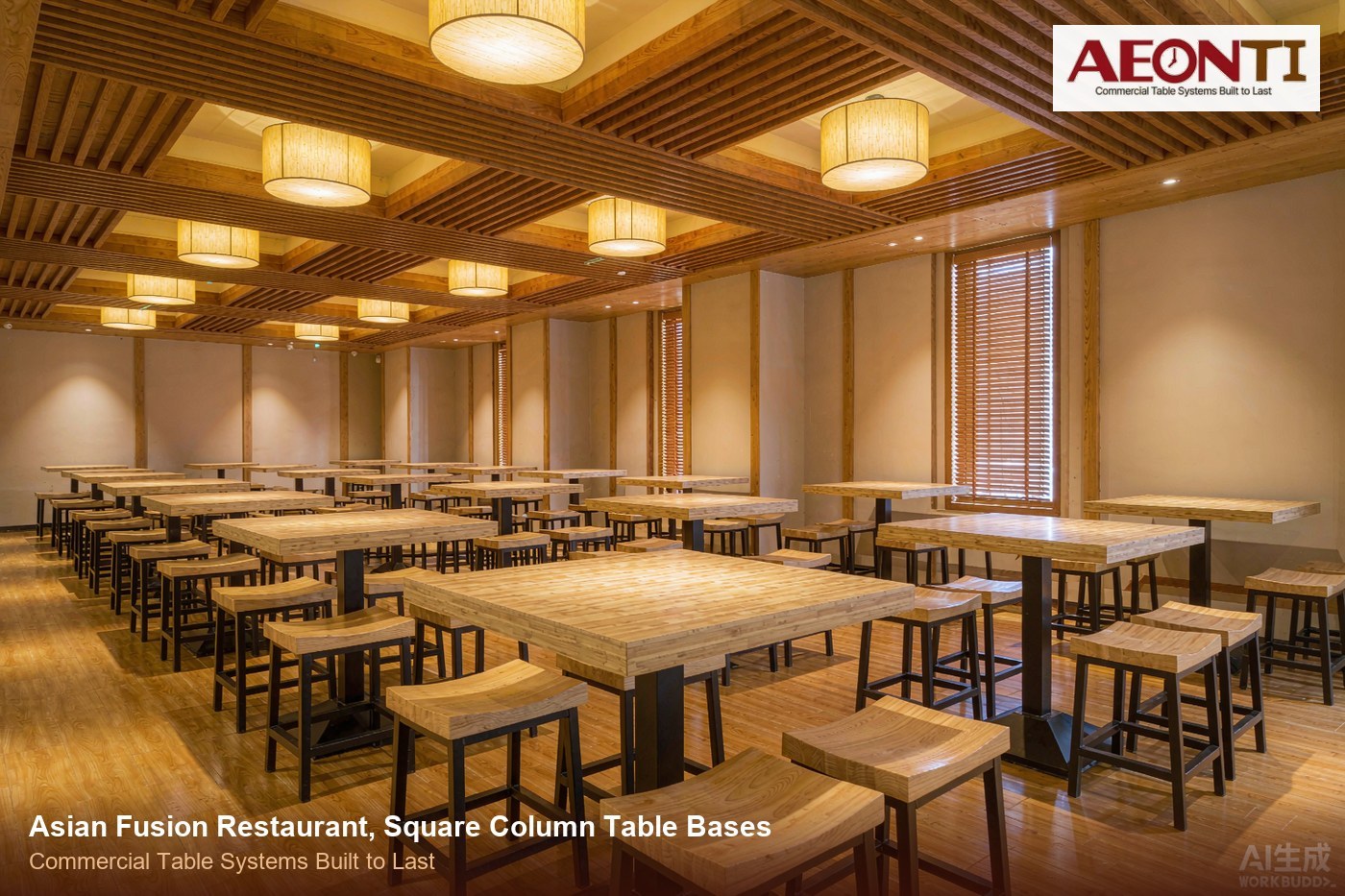
The most overlooked question in purchasing. When you buy, you see 100 table bases. Your customer sees 100 dining tables. And the restaurant owner sees hundreds of guests using those tables every day. Each table base must ultimately survive:
100 table bases on a purchase order
100 complete dining tables for resale
Daily high-frequency use, heavy tops, body contact, uneven floors, cleaning, moving, years of wear
This is why commercial furniture purchasing can never be judged by "nice photo + low price" alone. Heavy-duty structures like cast iron table bases and reinforced iron table bases exist precisely for this reality of restaurant table bases in daily service.
If my customers don't like what the supplier recommended, whose warehouse does it sit in?
Wholesalers should be especially alert to this. The supplier says "This is one of our best sellers" — so you buy 500 sets. But your customers actually prefer a different structure. The result is dead stock instead of a best-selling commercial table bases program:
Sold 500 sets. Order closed, invoice paid, next customer.
500 sets of slow-moving inventory — financed, warehoused, and eventually discounted.
So the smart purchasing question is never "Which product can the supplier sell me?" It is "Which table base can I sell to my customers?"
Do I have my own table base selection standard?
Before requesting any quote, professional buyers fill in a simple checklist. Build yours around these ten items:
| # | Checklist Item | You Should Answer |
|---|---|---|
| 01 · Customer | Target buyer | Who is my target customer for this product? |
| 02 · Application | Use scenario | Restaurant (restaurant table bases), café, hotel or general commercial space? |
| 03 · Tabletop | Top material | Wood, sintered stone, engineered marble or HPL? |
| 04 · Table Size | Top dimensions | What size tabletop will it carry? |
| 05 · Base Structure | Structure type | Single column, double column, four-leg or cross base? |
| 06 · Material | Base material | Iron, stainless steel, aluminum or cast iron? |
| 07 · Finish | Surface finish | Black, white, metallic or custom color? |
| 08 · Quantity | Order volume | 100, 500, 1,000 sets — or ongoing replenishment? |
| 09 · Packaging | Packing spec | Standard packing or project packing? |
| 10 · Delivery | Deadline | When does the project need the goods? |
Once these ten answers are clear, every supplier conversation becomes faster — and sharper.
Does a professional supplier ask ME questions back?
You send: "Please quote this table base." An instant reply of "$35/pc" is not necessarily professionalism. A supplier worth partnering with will ask back:
- What tabletop size will you use?
- What is the tabletop material?
- What quantity do you need?
- Where will the tables be used?
- Do you have a preferred finish?
- Do you have a drawing?
- Do you need customized dimensions?
- What is your target delivery date?
Why? Because a real table base manufacturer knows a table base is not an isolated product — it must work together with the tabletop, the use scenario, the space and the customer's needs.
What five capabilities should an ideal table base supplier have?
The best supplier is not "the one selling everything" — it is the one that helps you solve purchasing problems. Five capabilities to look for:
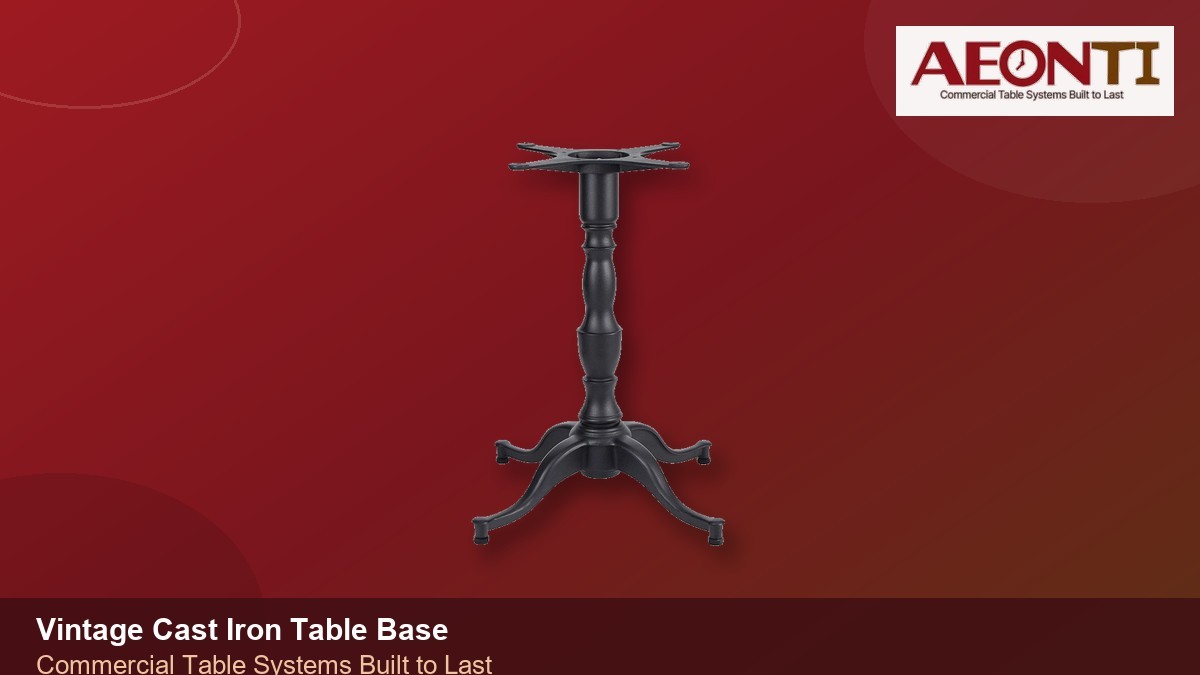
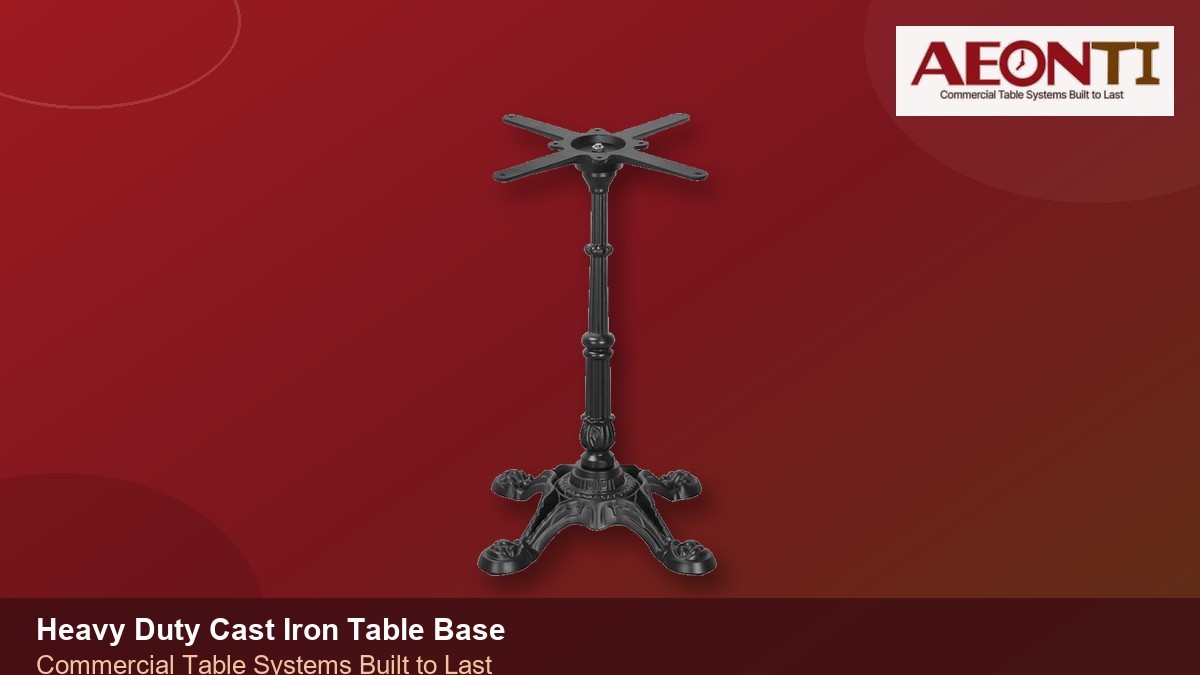
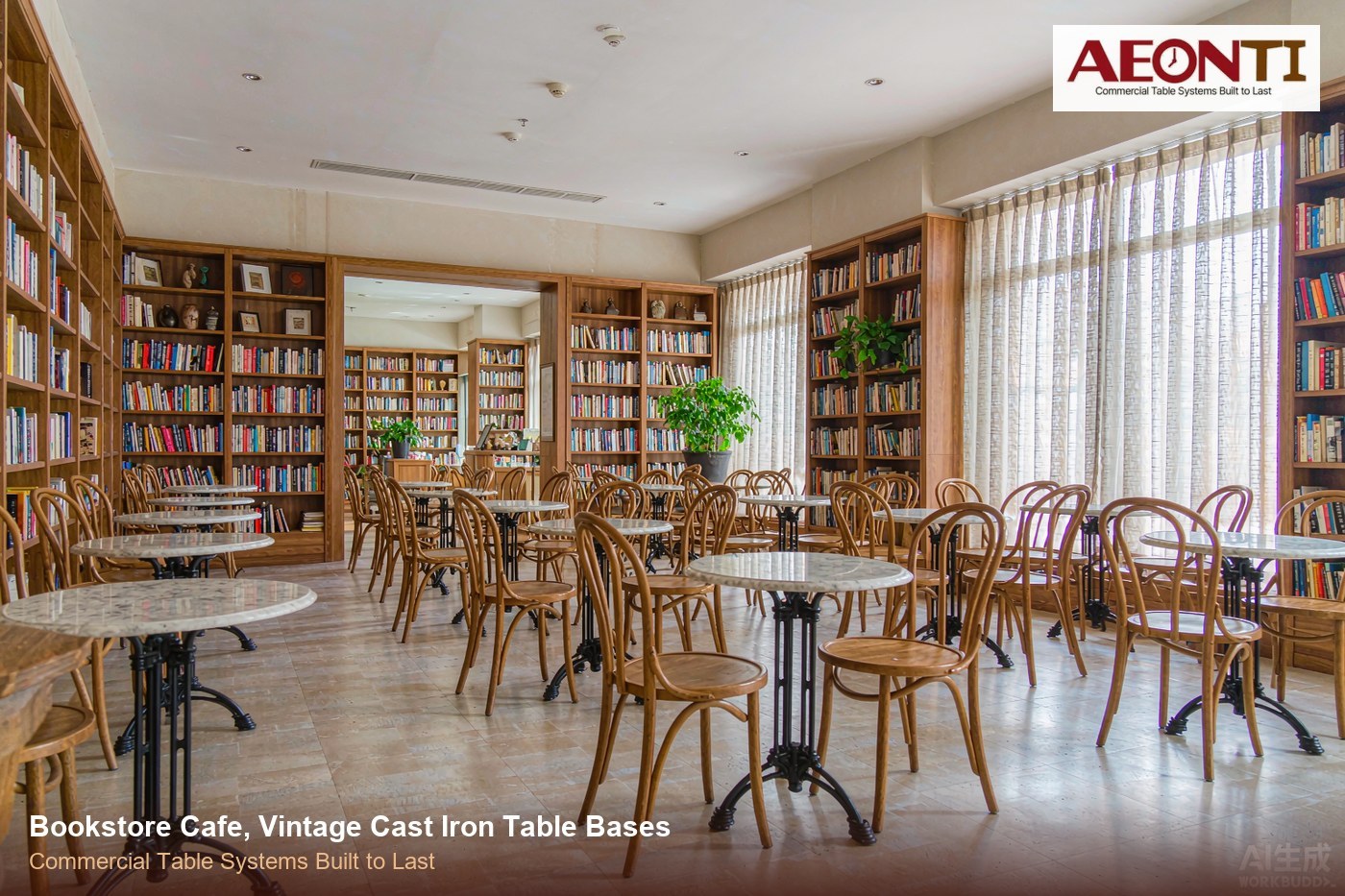
One supplier program, different answers: vintage cast iron for café character, heavy-duty cast iron table bases for high-frequency restaurant use.
My supplier only says "we can only do standard models" — now what?
It does not mean the supplier is bad. It means you must judge whether they fit your current business stage. If your customers have started asking "Can you make this custom size?", "Can you change the finish?", "Can you follow our drawing?", "Can you make 1,000 pcs of this table base?" — you have entered a new purchasing stage:
If my customer changes requirements tomorrow, can my supplier keep up?
The final test before any long-term partnership. Your customer says next month:
Your sales opportunity ends here.
Your sales opportunity continues — and grows.
Supplier flexibility is, in essence, your sales capability. An adaptable table base manufacturer with strong OEM/ODM capability turns requirement changes into new orders instead of lost customers.
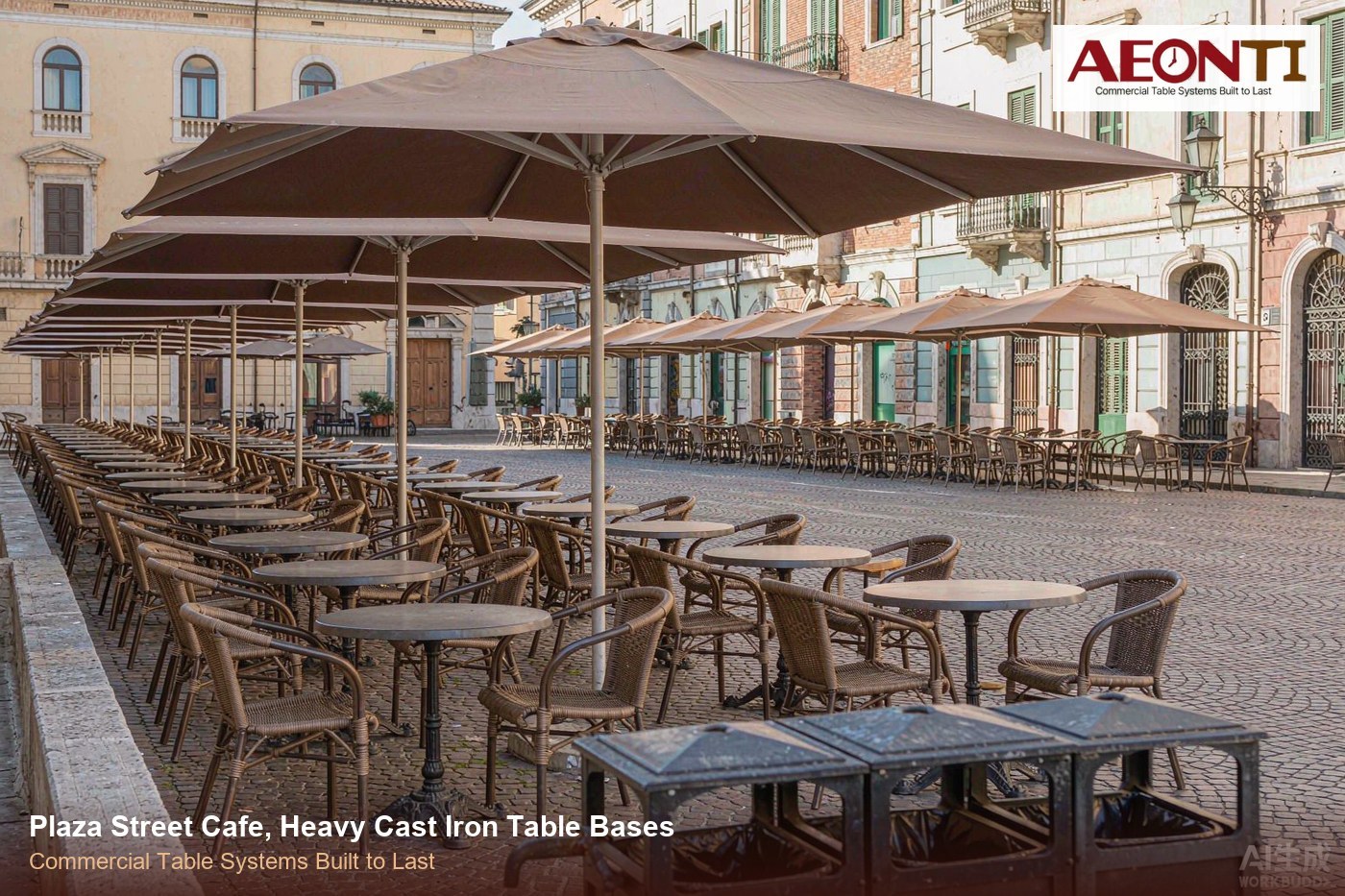
Should a supplier's catalog decide my product strategy?
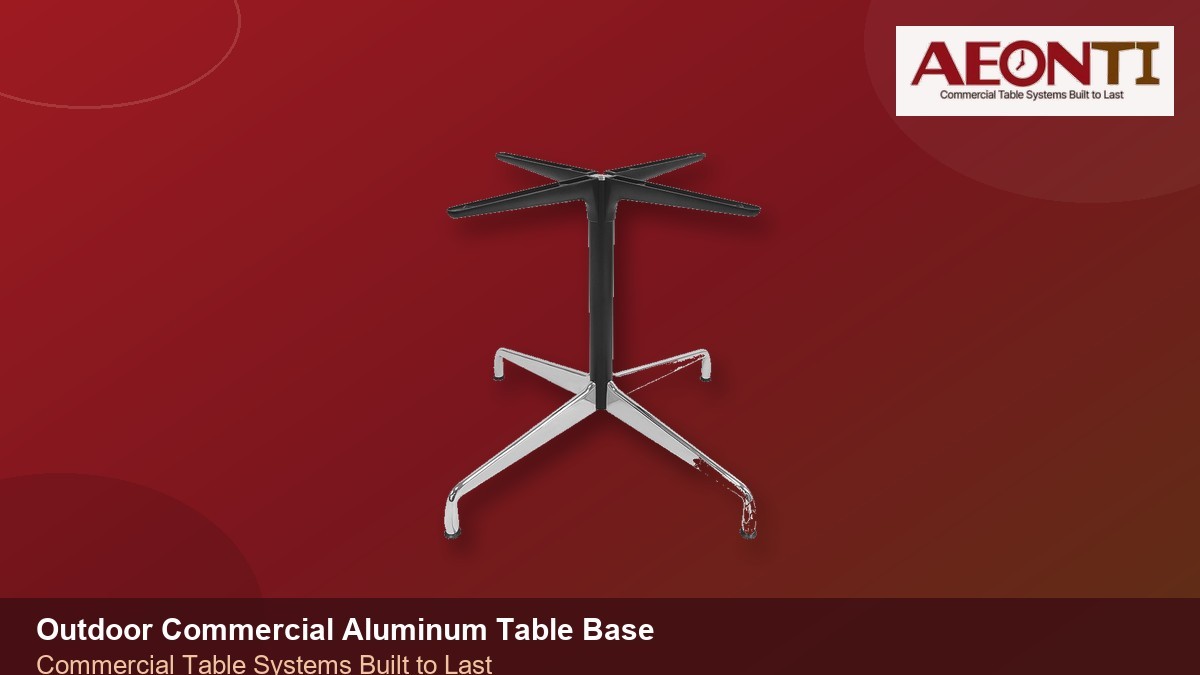
No. Remember one sentence: a supplier's catalog should be a resource — not your product strategy. The catalog should help you discover solutions, not limit you to what already exists. Your product strategy comes from customer demand; your manufacturer should help you realize it — not the other way around. Outdoor programs, for example, start from the application, then land on aluminum table bases for rust-free performance:
What does AEONTI actually sell — a table base, or a purchasing solution?
For wholesalers, dealers, restaurant furniture buyers and project purchasers, the real goal is not buying one table base — it is finding a manufacturer who can cooperate long term. AEONTI focuses on commercial dining products and provides:
- Metal Table Bases, Stainless Steel Table Bases, Iron Table Bases, Cast Iron Table Bases and Aluminum Table Bases
- Commercial Table Bases and Restaurant Table Bases for wholesale programs
- Dining Tables and tabletop solutions
- OEM / ODM, bulk wholesale, custom sizes and finishes, project-based purchasing
If you already have clear tabletop sizes, base dimensions, product photos, CAD drawings, reference samples, quantities or a target market — send them directly. We evaluate the right custom table base solution based on your actual demand, not by "picking one" from an existing catalog.
Are you choosing table bases based on your customers — or your supplier?
If your answer is "we want to choose based on our customers," the next step is simple: send AEONTI your tabletop sizes, use scenarios, estimated quantities and preferred colors or materials — plus product photos or drawings if you have them — and we will evaluate suitable commercial table base options for your next project.
Don't Just Buy What Your Supplier Has. Choose What Your Customers Actually Need.
Send us your requirements and request a table base solution for your next project. Our team responds with structure, material, finish and packing recommendations matched to your real scenario — plus a written quote for your actual quantity.
- Tell us: Application / Tabletop size / Material / Quantity / Finish / Target market
- Custom dimensions, structures and finishes evaluated against your drawings
- Bulk table bases wholesale with stable capacity and written lead times
- Packing and container loading plans adjusted to your project
- Long-term replenishment support for dealer programs