Commercial Table Bases for Restaurants – Durability Meets Design
- Share
- publisher
- Cinnia
- Issue Time
- Jul 23,2026
Summary
This article covers commercial table bases for restaurants, bars and cafes. It contrasts commercial and domestic table bases in load capacity, thickness, rust resistance and durability, introduces disc, four-leg and cross bases, and compares glossy, matte and brushed surface treatments. It matches industrial, modern and vintage styles to different catering venues, shares maintenance guides and purchasing tips, and promotes factory custom one-stop table base solutions for catering operators.
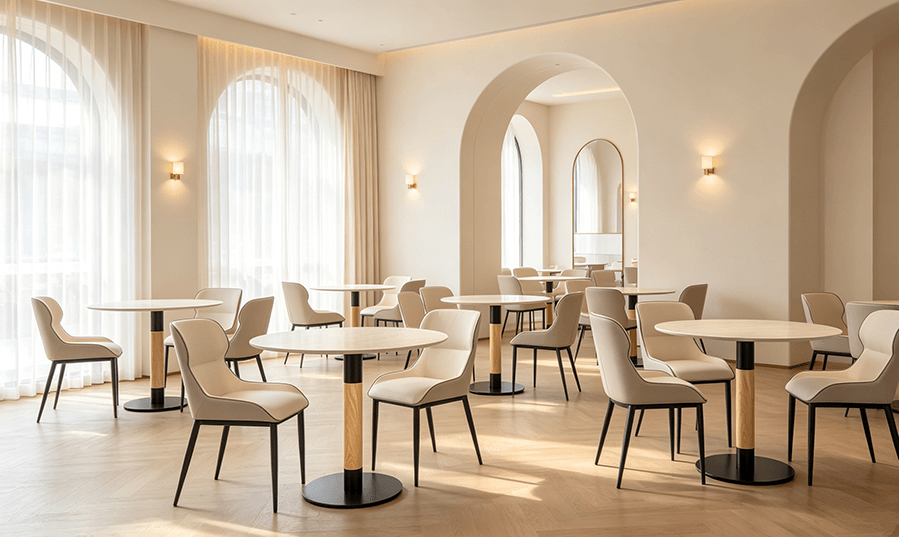
Opening: High-Frequency Demands on Table Bases in the F&B Industry
In the food and beverage industry, a single table may serve dozens of guests each day — from morning coffee to late-night drinks. Table bases endure an intensity of use far beyond anything found in a home setting. Whether it is an elegant round table in an upscale restaurant or a tall cocktail table in a bustling bar, the quality of the table base directly determines both the perceived safety of the dining experience and the aesthetic tone of the entire space.
When selecting table bases, restaurant owners face three core considerations: adequate load-bearing capacity, ease of daily maintenance, and whether the design complements the spatial theme. A wobbly, rusted, or cosmetically worn base not only detracts from the customer experience — it can pose a genuine safety hazard.
This brings us to a fundamental question: What exactly differentiates a commercial table base from a domestic one?
Commercial vs. Domestic Table Bases: The Essential Differences
Many first-time restaurant owners mistakenly assume that residential dining table bases can be used directly in a commercial setting. This is a costly misconception. Here are the key differences:
| Comparison Dimension | Commercial Table Base | Domestic Table Base |
| Load Capacity | Typically rated 200–250 kg+, verified by standardized load testing | Typically 50–150 kg, no commercial-grade testing certification |
| Material | Heavy-gauge carbon steel, stainless steel, cast iron; wall thickness ≥ 2 mm | Thin-wall steel tubing, standard iron; wall thickness approx. 1–1.5 mm |
| Surface Treatment | Multi-layer anti-rust processes (electroplating, powder coating, brushed finishing, etc.) | Basic spray paint or simple coating |
Stability Design | Enlarged base plate diameter + adjustable leveling feet, accommodates uneven floors | Fixed feet, high dependency on floor flatness |
Service Life | 5–15 years (under high-intensity use) | 3–5 years (under low-frequency use) |
Safety Certification | Passes commercial furniture standards testing | Typically no commercial certification |
Suitable Venues | Restaurants, bars, cafés, hotel banquet halls | Home dining rooms, kitchens |
Key Takeaway: Commercial bases outperform domestic products comprehensively across four dimensions — material thickness, structural design, surface protection, and safety certification. For F&B venues with 3–5 table turns per day, choosing a commercial-grade base is not an "upgrade option" — it is the baseline standard.
Restaurant Table Bases: Disc Base, Four-Leg Base, Cross Base
The choice of table base in a restaurant dining area directly impacts spatial layout flexibility, guest legroom comfort, and staff workflow efficiency. The following are the three most prevalent types of restaurant table bases:
Round table base — The Flexible Layout Choice
The disc base, with its single central column and round base plate, offers maximum seating flexibility for restaurants.
Advantages: No table legs obstructing guests; ample legroom; entry from any angle; ideal for both round and square tabletops
Base Plate Diameter: Typically 450–600 mm with added counterweight; larger diameter equals better stability
Compatible Tabletops: Round tops 600–1,200 mm in diameter, or square tops 600×600–900×900 mm
Recommended Settings: Café bistro tables, restaurant two/four-seater tables, banquet hall flexible table groupings
Four-Leg Table Base — The Reliable Choice for High-Traffic Dining
The four-leg base is the most common configuration in traditional restaurants, renowned for its exceptional stability and load-bearing capacity.
Advantages: Four-point support provides the strongest anti-tip performance; simple structure with low maintenance costs
Material Options: Carbon steel (powder coated), stainless steel (brushed/polished)
Compatible Tabletops: Rectangular dining tables 120–180 cm long, suitable for 4–8 guests
Recommended Settings: Family-style restaurants, high-turnover Chinese restaurants, fast-food chains
Cross Table Base — The Balanced Choice for Compact Spaces
The cross base combines the central support of a disc base with the stability characteristics of a four-leg base.
Advantages: More stable than a disc base; occupies less floor space than a four-leg base
Cross Arm Span: Typically 55–75 cm
Compatible Tabletops: Small to medium square and round tables
Recommended Settings: Space-constrained cafés, bakery dining areas, food courts
Surface Finishes:High Gloss, Polished, Matte, Brushed
Surface treatment not only determines the visual texture of the table base but also directly influences its rust resistance, wear resistance, and ease of cleaning. Below is a detailed comparison of four mainstream surface finishing processes:
| Finish Type | Visual Effect | Rust Rating | Wear Resistance | Cleaning Difficulty | Suitable Styles |
| High Gloss | Mirror-like high reflectivity, strong sense of luxury | ★★★★ | ★★★ | ★★★ (fingerprint-prone) | Modern luxury, high-end restaurants |
| Polished | Bright but not glaring, smooth and even | ★★★ | ★★★ | ★★★★ | Modern minimalism, business dining |
| Matte | Low reflectivity, soft and understated | ★★★★★ | ★★★★★ | ★★★★★ (dirt-resistant) | Industrial, Nordic, Japanese |
Brushed | Fine metallic texture, subtle sophistication | ★★★★ | ★★★★ | ★★★★ | Modern, light luxury, minimalist
|
Purchasing Recommendations
Coastal areas or outdoor dining zones:Prioritize matte powder-coated finishes for the strongest salt-spray corrosion resistance
High-turnover Chinese restaurants:Recommend brushed finishes — scratch-resistant and fingerprint/oil-resistant in appearance
High-end Western restaurants or hotels:High-gloss or polished finishes elevate the visual tone, paired with regular professional maintenance
Popular Style Recommendations (Industrial, Modern, Retro)
The table base is a critical component of a restaurant's overall design language. The same tabletop paired with bases of different styles can project entirely distinct spatial personalities.
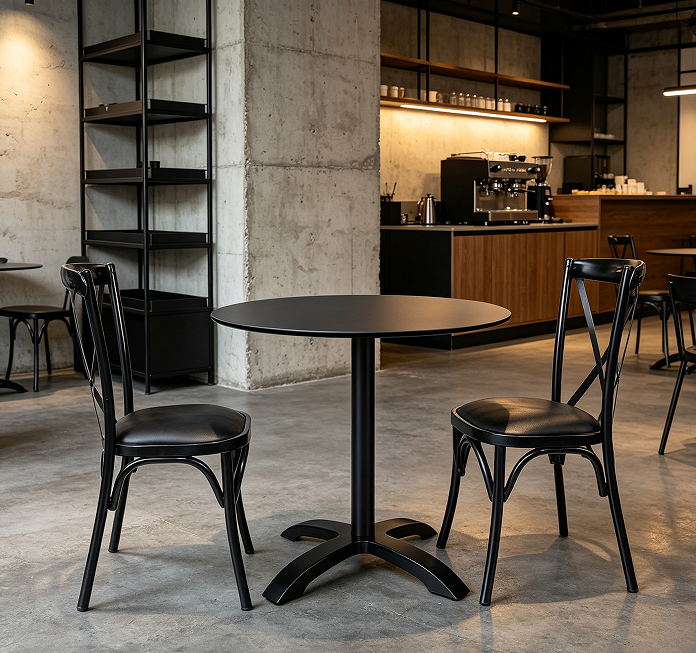
Industrial Style
Industrial style has become one of the most sought-after design directions for F&B interiors in recent years.
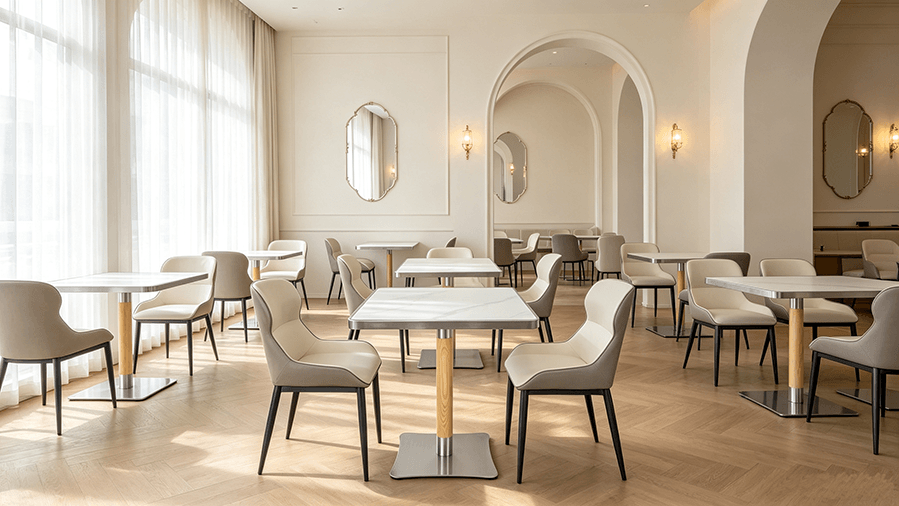
Modern Style
Modern style pursues clean lines and form-follows-function principles, ideal for high-end dining and business venues.
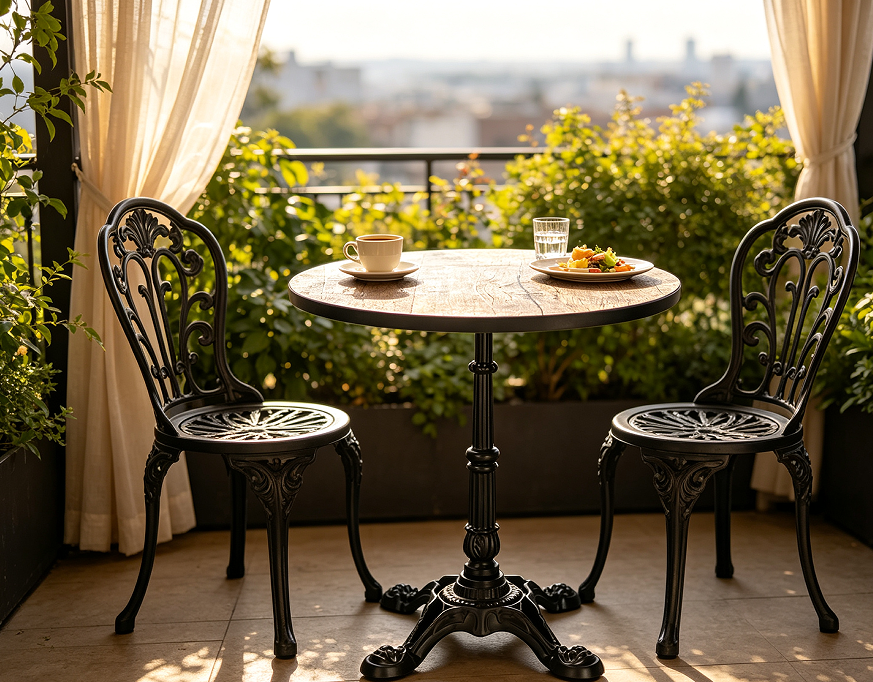
Retro / Vintage Style
Retro style evokes nostalgia through classic forms and distressed finishing techniques, creating a warm and inviting dining atmosphere.
Three Styles at a Glance
| Style | Keywords | Representative Materials | Target Atmosphere |
| Industrial | Rugged, raw, bold | Black carbon steel, cast iron | Youthful, individualistic, relaxed |
| Modern | Clean, restrained, refined | Brushed stainless steel, chrome | Upscale, professional, elegant |
| Retro | Classic, warm, storied | Ornamental cast iron, brass | Intimate, nostalgic, romantic |
Case Studies: Base Configurations for Various F&B Spaces
The following are typical configuration plans drawn from real-world F&B projects, provided as a reference for operators across different formats:
Configuration Case Overview
| Venue Type | Primary Base | Secondary Base | Recommended Style | Tabletop Pairing |
| Upscale Western Restaurant | Disc base (polished stainless steel) | Four-leg base (brushed) | Modern | Marble / sintered stone tabletops |
| Chinese Banquet Restaurant | Four-leg base (matte black) | Disc base (with lazy Susan) | Modern Chinese | Solid-wood round tables + glass turntable |
| Craft Beer Bar | T-base (black carbon steel) | Height-adjustable base | Industrial | Solid-wood slab tabletops |
Café | Disc base (brushed) | Cross base | Modern / Retro | Ash / oak tabletops |
Fast-Food Chain | Four-leg base (powder coated) | Cross base | Modern minimalist | Laminate / HPL tabletops |
Hotel Banquet Hall | Disc base (high-gloss chrome) | Four-leg base (folding) | Modern luxury | Folding banquet table boards |
Outdoor Dining Area | Cross base (stainless steel matte) | Four-leg base (weighted) | Modern / Natural | Weather-resistant timber / faux-wood aluminum tabletops |
Configuration Principle:Use high-stability bases (four-leg / cross) in the main dining area; use disc bases along windows or in corner zones for added flexibility; unify bar counter areas with T-base or height-adjustable bases.
Maintenance Tips
The service life of commercial table bases depends heavily on routine care. The following maintenance recommendations are validated by real-world F&B operational practice:
Daily Cleaning
| Surface Type | Cleaning Method | Precautions |
| Brushed / Matte | Damp soft cloth + neutral detergent | Avoid steel wool or abrasive brushes |
| High Gloss / Polished | Dedicated stainless steel cleaner + microfiber cloth | Wipe along the grain direction; avoid circular rubbing |
| Powder Coated | Damp cloth + mild soap solution | Dry immediately to prevent water-spot residue |
Cast Iron / Distressed | Dry cloth dusting + periodic wax protection | Do not use chlorine-based cleaners |
Periodic Inspection Checklist
Monthly: Check all screws and fasteners for looseness; tighten to standard torque with a torque wrench
Quarterly: Inspect adjustable leveling feet for wear; replace as needed
Semi-Annually: Deep-clean metal surfaces and apply protective treatment (waxing / anti-rust spray)
Annually: Conduct a comprehensive inspection of weld points and structural integrity; assess whether refinishing or replacement is required
Three Keys to Extended Lifespan
Avoid Dragging: Always lift tables when repositioning — never drag the base directly across the floor
Control Humidity: Damp environments accelerate metal corrosion; maintain indoor ventilation and dehumidify regularly
Repair Promptly: At the first sign of rust or coating peeling, carry out localized repairs immediately to prevent spreading
Inquiry Guidance
Choosing the right commercial table base supplier is the final — and critical — step in ensuring product quality and after-sales support.
Key Questions When Selecting a Supplier
When submitting inquiries to suppliers or manufacturers, we recommend focusing on the following points:
Minimum Order Quantity (MOQ) and tiered pricing
Customization capabilities: Are custom dimensions, colors, and surface finishes supported?
Sample lead time and bulk delivery timeline
Are installation guidance and technical documentation provided?
Why Choose Us
As a professional commercial table base manufacturer, we provide restaurant and hotel clients worldwide with:
Full product range — Disc bases, square plate bases, four-claw bases, and cross bases — one-stop procurement
Customization services — Dimensions, colors, surface finishes, and logo engraving are all customizable
Rapid response — Quotations within 24 hours; samples shipped within 7–15 business days
Contact us today for a free product catalog and customized quotation. Whether you are preparing a new restaurant opening or upgrading existing furniture, we deliver the most professional commercial table base solutions for your venue.
📞 WhatsApp: +86 17841353079
📧 Email: aeonti@aeonti.com
🌐 Website: www.aeonti.com