Custom Table Bases: When Is Customization Actually Worth the Extra Cost?
- Share
- publisher
- AEONTI
- Issue Time
- Nov 5,2026
Summary
Are custom table bases worth the extra cost? This B2B guide explains why customization costs more, the 5 situations where it genuinely pays off (special sizes, heavy tops, special heights, brand identity), when standard table bases are smarter, why small orders hurt, and how to compare total cost of ownership instead of unit price.
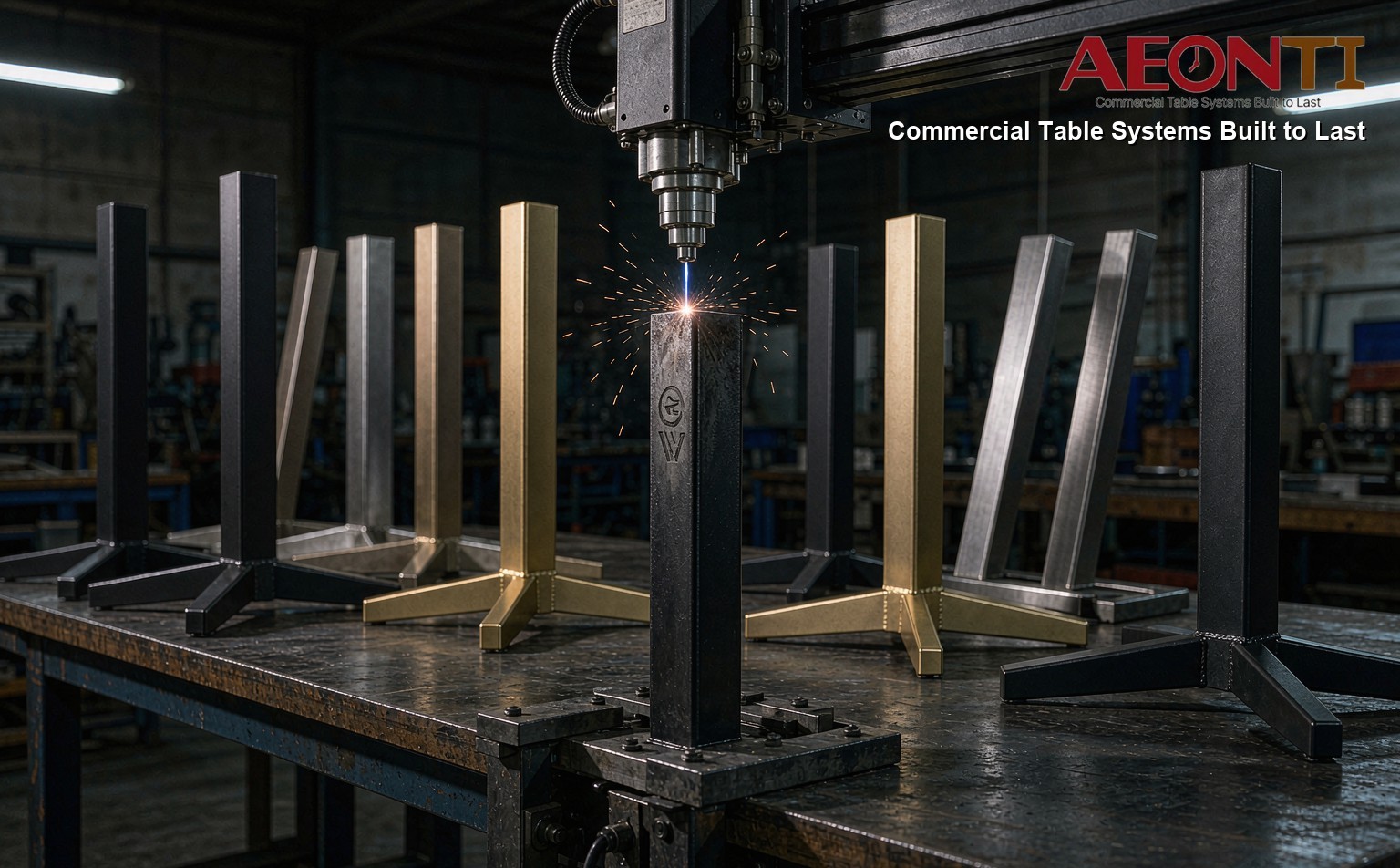
Are custom table bases really worth paying more for? For restaurants, cafés, hotels, furniture brands, wholesalers and project buyers — the answer is neither a simple "Yes" nor "No".
If a standard table base already meets your tabletop size, stability, mounting and appearance requirements, customization is usually unnecessary. But if standard products would result in an unstable table, mismatched tabletop dimensions, difficult installation, inconsistent project styling — or even weaker sales across your whole furniture line — then the extra cost of custom table bases may actually reduce your overall project cost.
The question worth asking is not:
It should be:
For commercial furniture procurement, that is the real test of whether a custom table base is worth it.
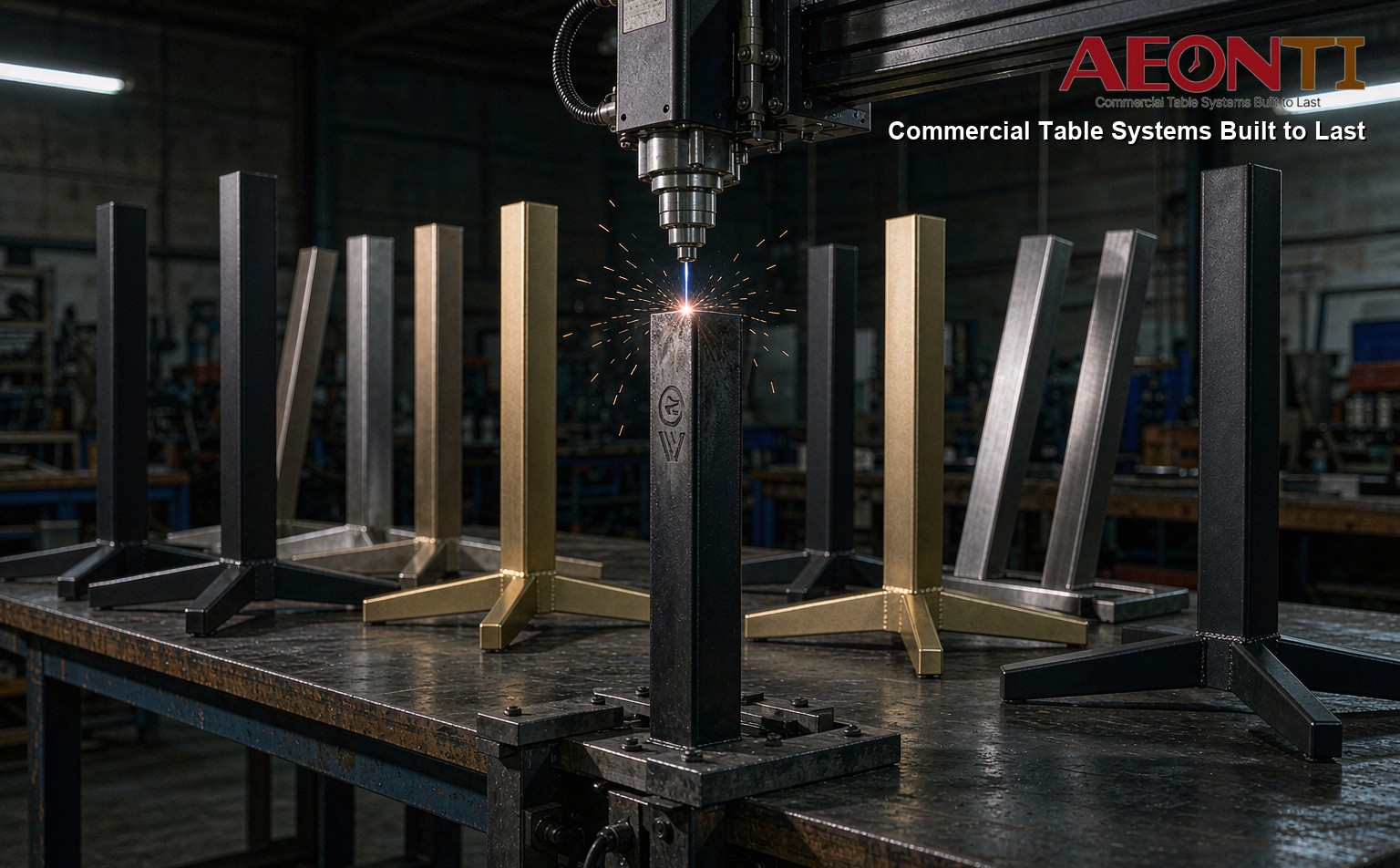
1. Why Do Custom Table Bases Usually Cost More?
Many buyers discover on their first inquiry that for the same metal table base, a standard model is priced low while a custom quote is visibly higher. This does not necessarily mean the supplier is "padding the price". Custom products involve more engineering and production steps, such as:
- Special size design
- Different tube or plate specifications
- Special base footprint dimensions
- Special mounting hole patterns
- Special heights
- Special colors or surface finishes
- New structure development
- Sample making
- Molds or tooling
- Small-batch production
- Custom packaging
- Brand logos or labels
For OEM/ODM table base projects, the factory usually must first confirm structure, dimensions, material, mounting method and production feasibility before sampling and mass production. So a higher custom price does not mean customization has no value. The key question is: does the extra cost solve a problem that a standard product cannot?
| Cost Factor | Standard Product | Custom Product |
|---|---|---|
| Unit Price | Lower | Possibly higher |
| Development Cost | Low | May be added |
| Sample Cost | Low | May be added |
| Molds / Tooling | Usually none | Required for some projects |
| Packaging | Standard | Customizable |
| Installation Match | Depends on the product | Optimized for your project |
| Batch Consistency | Standard | Controlled to your project standard |
| Product Differentiation | Lower | Higher |
| After-Sales Maintenance | Standard | Planned per project |
Where the extra cost goes — and what it can buy back for your project.
2. When Custom Table Bases Are Truly Worth It
1. When Your Tabletop Size Clearly Deviates from Standard Dimensions
This is one of the most common — and most justified — reasons to customize. For example, your project requires:
- 1800 × 800 mm long tables
- 2000 × 900 mm dining tables
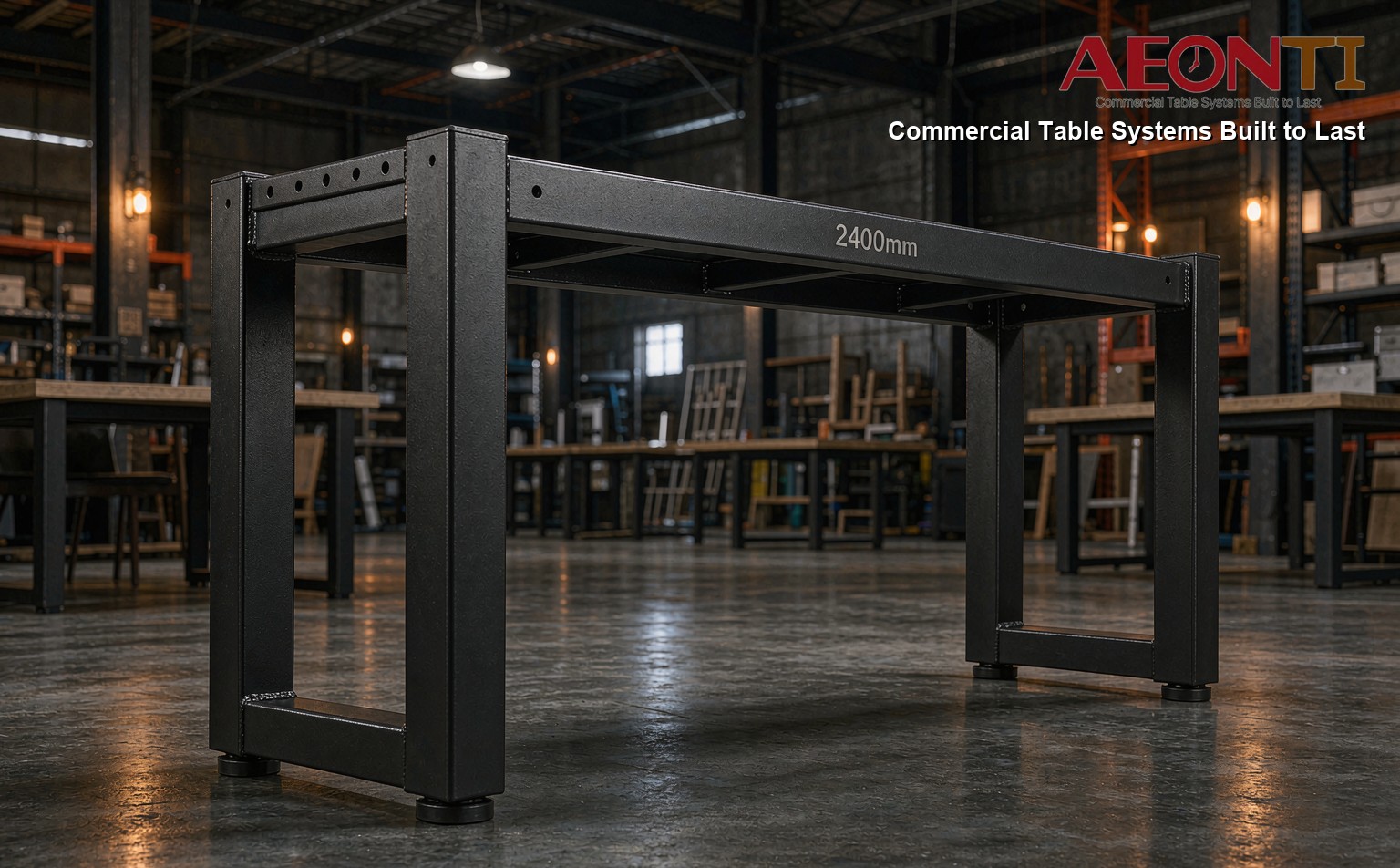
- 2400 mm large conference tables
- Special-size round tables
- Extra-long dining tables
- Sintered stone or stone table tops
If you force-fit a standard table base in these cases, several problems can appear: the base may be too small for sufficient stability, positioned so the tabletop load is uneven, set too far in so guests bump their legs, or set too far out so walkway space is affected.
In commercial projects especially, the tabletop and the table base should be considered as one complete structure — not compared as separate price items. The tabletop's size, weight, material and mounting method all affect base selection. So if your table top is already fixed and its dimensions are unusual, customizing a matching table base is usually smarter than forcing a standard product to fit.
3. When Your Tabletop Is Especially Heavy, Custom May Be Cheaper Than "Buying Cheap"
This is easy to overlook. Suppose an ordinary HPL tabletop and a sintered stone tabletop have exactly the same dimensions. Do they need exactly the same table base? Not necessarily. If the tabletop weight increases significantly, the base structure, footprint size, column specification, mounting method and overall stability all need re-evaluation — especially for thick sintered stone, natural stone table tops, heavy engineered marble and oversized commercial table tops.
If you save a few dozen dollars by choosing an unsuitable base, the result can be wobbling tables, tilted tops, corners that dip under load, wrong mounting holes, poor guest experience and rework on site. For bulk projects, one wrong table base choice costs far more than the price difference of the base itself.
4. When You Need a Special Height, Customization Is Worth It
Standard dining height does not cover every commercial scenario: standard dining height is typically 720–750 mm, counter height around 900 mm, and bar height 1050–1100 mm. If your project has a fixed final table height requirement, base height is a critical parameter.
One detail matters a lot: don't just tell the supplier "I want a 900 mm table." Clarify instead: is 900 mm the final tabletop height, or the table base height? Final height is also affected by tabletop thickness, mounting structure and the base connection method. If your tabletop is 30 mm thick, there is a precise calculation between base height and final height. For bulk purchasing, if this is not confirmed early, changes during production or on site become very expensive. See how table base height, finish and base size customization works in practice.
5. When You Need Your Own Product Look, Customization Has Real Commercial Value
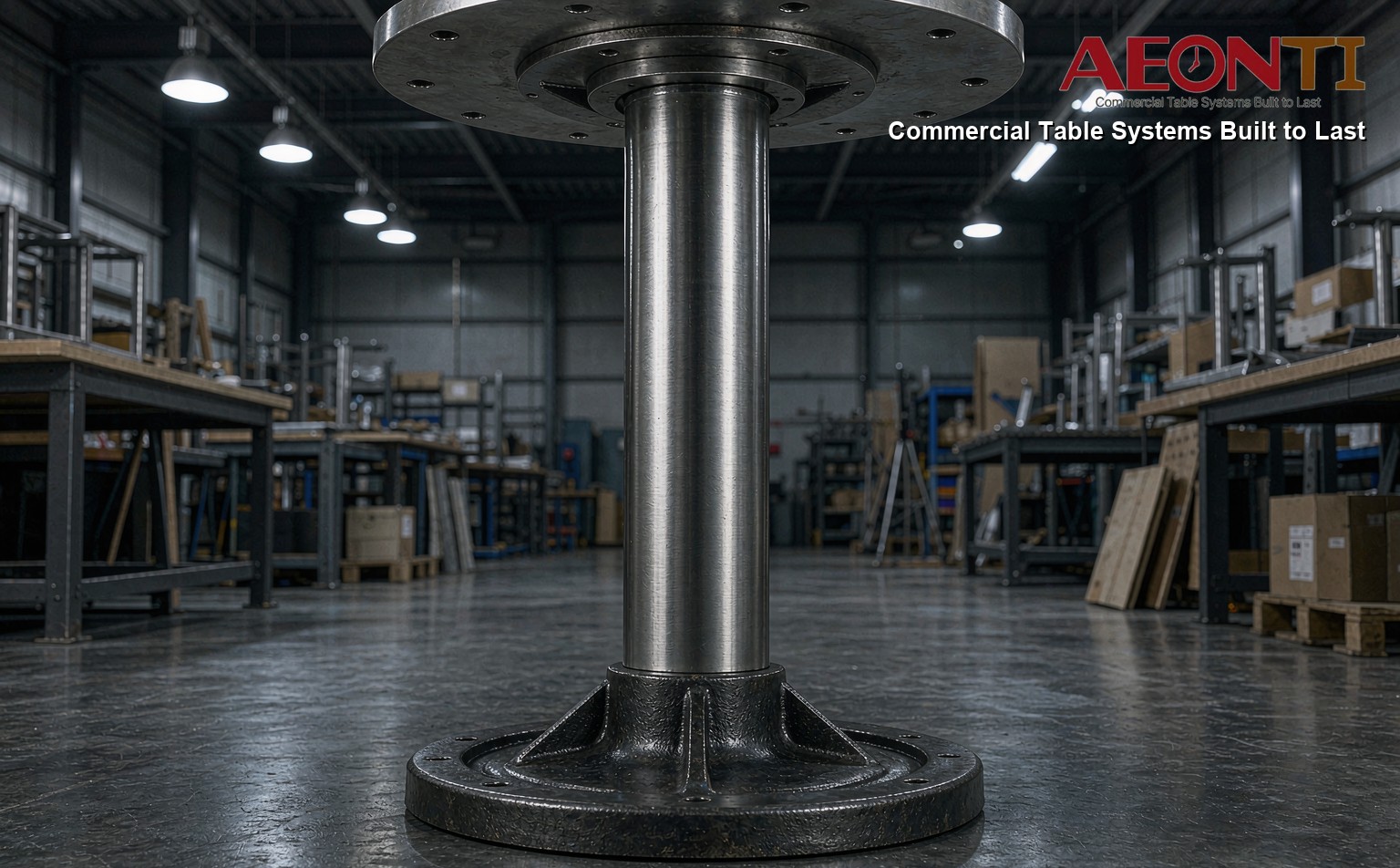
For furniture brands, restaurant chains and furniture distributors, this may be the most important value of customization. Because you are not buying "a set of table bases" — you are buying a product line that must keep selling for years. If every competitor uses similar round bases, square bases or ordinary cast iron table bases, your products will struggle to stand out.
Customization can help you build a unique base structure, a distinctive brand style, exclusive colors, special surface finishes, unique mounting structures, exclusive logos and your own product series. For furniture brands, this value is not just "looking good" — it builds product identity. Leading commercial table base manufacturers treat size, color, structure, mounting and OEM/ODM table base services as core parts of their custom project offering.
6. If You Only Want a Different Color, Do You Really Need Full Customization?
Not necessarily — and this is worth every buyer's attention. "Customization" does not mean everything must be developed from scratch. Sometimes what you really need is:
If a standard base structure already meets your requirements and you just need matte black, white, gold, brushed stainless steel or a specific brand color, ask the supplier first: "Can this existing table base be produced in our required finish?" This typically reduces development cost, sampling cost, development time and production risk — an important cost-control mindset for bulk purchasing.
7. When Custom Table Bases Are NOT Worth It
Not every project suits customization. If you are only buying a few dozen sets, and your tabletop size is standard, standard height is fine, standard colors are fine, no special mounting holes are needed, no special structure is needed, no brand logo is needed, no exclusive design is needed, and standard products already meet stability requirements — then simply buying a standard table base is the smarter choice.
There is no reason to customize for customization's sake — paying development fees when standard products already solve your problem only reduces procurement efficiency.
8. Be Especially Careful with Customization on Small Orders
A reality check for B2B buyers. Standard table bases: 100 sets. Custom table bases: 100 sets. It looks like just a different product — but if the custom version requires a new structure, new samples, new packaging and special production processes, those development costs get spread across every unit. The smaller the order, the more visible the customization cost per unit becomes.
Conversely, if you are a furniture wholesaler, furniture distributor, restaurant chain, furniture brand, hospitality project, hotel project or commercial furniture manufacturer with ongoing purchasing needs, the economics of customization improve dramatically — one development investment keeps serving multiple future batches. Buyers starting at a 100-set MOQ can often absorb custom development cost far more easily than buyers locked into 500-set minimums elsewhere.
9. Never Compare Only the "Custom Table Base Unit Price"
Many buyers compare like this: Supplier A at $35/set, Supplier B at $39/set, Supplier C at $42/set — then conclude Supplier A is cheapest. But professional procurement compares Total Cost of Ownership. For project purchasing, a cheap table base that causes on-site re-drilling, base replacement, reordering, reshipment, installation delays or customer complaints will eat up the initial savings very quickly.
In commercial project procurement, a supplier's specification accuracy, sample confirmation, packaging, batch consistency and project support capability all belong in the final supplier comparison — see what a documented QC system like 7-stage table base quality control tells you about a supplier before you commit.
10. A Simple Formula: Is Your Customization Worth It?
If you are considering custom table bases, ask yourself these 7 questions:
11. The Smartest Way: Don't Customize Everything — Customize What Matters
This may be the most valuable sentence in commercial furniture procurement:
Don't redevelop every component just to make a product "look special". The better approach is to keep the standard parts — proven base structures, validated production processes, standard tube materials, conventional mounting methods and standard packaging — and customize only the parts that affect your project: height, base size, mounting plate, tube size, finish, color, tabletop compatibility and special structure.
This balance between differentiation, performance and cost is exactly where a custom table base manufacturer adds real value.
12. What Information Should You Provide When Requesting a Custom Table Base Quote?
If you are ready to customize metal table bases, don't just send one line: "Please quote custom table bases." That kind of inquiry rarely gets an accurate quote. Provide at least these 10 items:
13. So — When Are Custom Table Bases Worth It?
| Your Situation | Is Customization Worth It? |
|---|---|
| Standard tabletop + standard height | No — usually not necessary |
| Only need a different color on a standard base | Caution — prefer standard structure + custom finish |
| Special tabletop size | Yes — worth it |
| Oversized tabletop | Yes — worth it |
| Extra-heavy tabletop | Yes — worth it |
| Special tabletop height | Yes — worth it |
| Special mounting hole patterns | Yes — worth it |
| Restaurant chain unifying product style | Yes — worth it |
| Furniture brand building an exclusive product line | Yes — very worth it |
| Long-term bulk purchasing | Yes — even more worth it |
| Only a few dozen sets, standard products fully sufficient | No — usually not recommended |
Find your situation, then read the verdict before you request a custom quote.
14. Conclusion: Don't Ask "Is Customization Expensive?" — Ask "What Can It Save Me?"
For B2B commercial furniture buyers, custom table bases are not "the more custom, the better". Customization only has real value when it solves a problem a standard product cannot. If your project requires special sizes, special heights, higher stability, a unique product look, special colors, OEM/ODM products or long-term bulk supply, then the extra cost of customization can return lower project risk, better product differentiation and more stable long-term supply. But if you just need an ordinary-size, ordinary-height, ordinary-color dining table, a mature standard product is usually enough.
The best procurement strategy is neither "Always Customize" nor "Never Customize". It is:
Need Custom Metal Table Bases for Your Project?
If you are sourcing custom metal table bases, commercial table bases or restaurant table bases and aren't sure whether to go standard or custom — send us your project details first, and get a professional evaluation before you commit to production:
- Free feasibility review — our engineering team assesses standard base / modified standard / fully custom options for your project
- Fast sampling — confirm structure, finish and stability before bulk production
- MOQ from 100 sets — custom development made affordable for mid-volume buyers
- OEM/ODM support — your logo, your finish, your exclusive product line
- Project engineering check — tabletop size, weight, mounting and final height verified before tooling