Iron Stamping vs Cast Iron Table Bases: Which Is Right for Your Business?
- Share
- publisher
- Cinnia
- Issue Time
- Jul 24,2026
Summary
This article compares the differences between stamped iron table bases and cast iron table bases in manufacturing process, load capacity, appearance, logistics cost and applicable scenarios, analyzes the advantages and disadvantages of the two types of table frames, and provides purchasing reference for furniture wholesalers and catering decoration buyers. Our factory supports OEM & ODM customization of all kinds of commercial dining table bases.
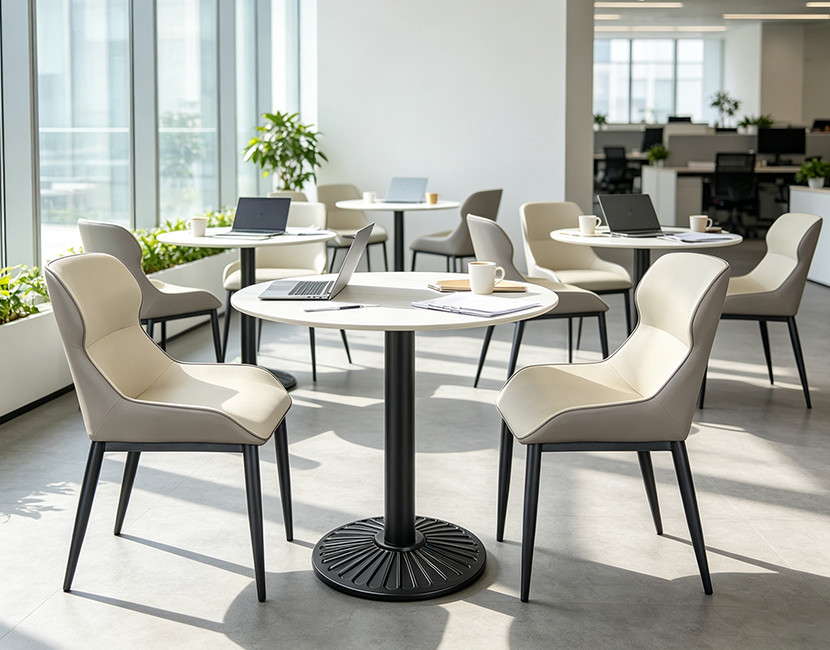
Iron Stamping vs Cast Iron: Clearing Up the Confusion
When sourcing metal table bases, many wholesalers and furniture brands face a common dilemma: what exactly is the difference between iron stamping and cast iron?
Although both use iron as their primary raw material, they differ drastically in manufacturing process, structural properties, aesthetic style, and ideal applications. In simple terms:
Iron stamping bases — formed by stamping, bending, and welding steel sheets; lightweight structure with flexible design possibilities
Cast iron bases — created by pouring molten iron into molds and allowing it to cool; heavy, solid, and exceptionally strong
Choosing the wrong base type can compromise a table's appearance and user experience — or worse, lead to structural instability and frequent repairs that damage your brand reputation. This article provides an in-depth analysis of the two base types across manufacturing, aesthetics, durability, cost, and recommended applications to help you make the optimal sourcing decision.
Cast Iron Table Bases: Manufacturing, Weight & Load Capacity
What Are Cast Iron Table Bases?
Cast iron bases are produced through a casting process. The workflow: pig iron is heated to approximately 1200°C until molten, poured into pre-made sand molds or metal molds, allowed to cool and solidify, then removed from the mold and finished through grinding, painting, and surface treatment.
| Dimension | Cast Iron Base Characteristics | Details |
| Manufacturing Process | Sand casting / metal mold casting | Single-step forming; ideal for standardized mass production |
| Unit Weight | 15–40 kg (disc base example) | High density and self-weight; higher shipping costs |
| Load Capacity | ⭐⭐⭐⭐⭐ Exceptional | 200–300 kg load-bearing; ideal for heavy tabletops (marble, thick solid wood) |
Stability | Extremely high | Low center of gravity and heavy self-weight; resists wobbling and tipping |
Design Complexity | Moderate | Suited to heavy, geometric shapes; fine detail limited by mold precision |
Surface Finish | Spray painting, powder coating, electroplating | Typically matte black |
Advantages of Cast Iron Bases
Unrivaled load capacity: The stability from self-weight is irreplaceable — the first choice for large dining tables and commercial tables
Excellent durability: Impact-resistant and deformation-resistant
Superior vibration damping: High-density material effectively absorbs vibrations, keeping tabletop items stable
Classic industrial aesthetic: The heavy industrial style is highly popular in upscale restaurants and vintage furniture markets
Disadvantages of Cast Iron Bases
Heavy self-weight results in high logistics costs (sea and land freight per unit significantly higher than iron stamping bases)
Design flexibility is constrained by mold limitations; intricate patterns are difficult to achieve
If the surface coating is damaged, exposed iron rusts easily
Installation and handling require multiple people
Iron Stamping Table Bases: Forging Process & Design Flexibility
What Are Iron Stamping Table Bases?
Iron stamping bases are manufactured using cold stamping / hot stamping + welding processes. Steel sheets (typically Q235 low-carbon steel) are pressed into the desired shape by stamping machines, then undergo tube bending, welding, grinding, and painting. Some premium products use wrought iron techniques, where the metal is heated and repeatedly hammered into shape, giving the base a distinctive handcrafted character.
| Dimension | Iron Stamping Base Characteristics | Details |
| Manufacturing Process | Stamping + welding / wrought iron hammering | Multi-step combination; extremely high flexibility |
| Unit Weight | 5–18 kg (disc base example) | Lightweight; low shipping costs; end-user installation friendly |
| Load Capacity | ⭐⭐⭐⭐ Good | 80–150 kg load-bearing; meets most residential and light commercial needs |
Stability | Medium to high | Base span design compensates for lighter self-weight |
Design Complexity | Extremely high | Elegant curves, scrollwork, and woven patterns achievable |
Surface Finish | Powder coating, electroplating, antique finishing | Wide color range (black, white, custom colors) |
Advantages of Iron Stamping Bases
Design flexibility far exceeds cast iron: Curves, cutouts, and woven effects are all achievable, suiting both modern and classical styles
Lightweight and logistics-friendly: A 40HQ container can hold significantly more iron stamping bases than cast iron
Easy installation: End users can assemble themselves, reducing after-sales costs
Low customization threshold: Stamping mold costs are far lower than casting molds; small-batch customization is more economical
Disadvantages of Iron Stamping Bases
Lighter self-weight means inferior performance in extreme load-bearing scenarios compared to cast iron
If weld quality is poor, joints may become structural weak points
Thin-wall tubing in prolonged outdoor exposure requires high-quality rust-resistant coating
Appearance Comparison: Wrought Iron vs Cast Iron
Aesthetic style is often the primary factor for furniture brands when choosing a base type. Below is a detailed comparison across appearance dimensions:
| Aesthetic Dimension | Iron Stamping Table Base | Cast Iron Table Base |
| Line Style | Slender, flowing, elegant | Bold, heavy, powerful |
| Pattern Expression | Scrollwork, vine motifs, geometric cutouts — delicate and refined | Relief patterns, crest motifs, claw-foot designs — strong three-dimensionality |
| Surface Texture | Smooth and even, uniform coating | Slightly grainy texture from sand mold casting |
Color Options | Wide: black, white, custom colors | Relatively limited: primarily matte black |
Matching Styles | Modern minimalist, luxury light, Nordic, French country, industrial | Vintage industrial, American farmhouse, high-end commercial spaces |
Visual Mass | Light and airy; does not overwhelm the space | Heavy and imposing; strong presence |
Durability Comparison: Outdoor Adaptability & Rust Resistance
Durability directly impacts product lifespan and customer satisfaction. Below is a comparison from indoor/outdoor suitability and rust resistance perspectives:
| Durability Dimension | Iron Stamping Table Base | Cast Iron Table Base | Winner |
| Structural Strength | Depends on weld quality | Integral casting; inherently robust | Cast Iron |
| Impact Resistance | Moderate; thin-wall tubing may dent under heavy impact | Extremely strong; high-density material | Cast Iron |
| Rust Resistance | Depends on coating quality; powder coating + e-coat primer lasts years outdoors | Depends on coating quality; casting micropores require full coverage | Tie (both coating-dependent) |
Outdoor Adaptability | ★★★★ Ventilated structure resists water pooling; lightweight for storage | ★★★ Heavy weight makes moving difficult; watch for water traps | Iron Stamping |
Wind Stability | ★★★ Lighter self-weight; needs heavy tabletop in windy conditions | ★★★★★ Self-weight advantage is clear; top choice for outdoor wind resistance | Cast Iron |
Key Reminder: Regardless of the base type you choose, surface coating quality is the decisive factor for rust prevention. Always request coating test reports from your suppliers to ensure outdoor-grade quality.
Cost Comparison: Procurement & Maintenance
For wholesalers and brands, cost is one of the core decision factors. Below is a comparison across procurement, logistics, and maintenance costs:
| Cost Dimension | Iron Stamping Table Base | Cast Iron Table Base |
| Mold Development Cost | Low to moderate (stamping molds $300–1,200/set) | Moderate to high (casting molds $700–3,000/set) |
| Unit Factory Price | $8–35 (depending on size and complexity) | $14–55 (depending on weight and design) |
| MOQ | 50–100 units (flexible) | 100–200 units (higher mold cost amortization requirement) |
Sea Freight (per unit) | ~$2–6 (light weight, high loading capacity) | ~$6–17 (heavy weight, low loading capacity) |
Packaging Cost | Standard carton + foam | Reinforced packaging required (anti-impact); 30–50% higher cost |
Maintenance Cost | Low: virtually maintenance-free with intact coating | Low to medium: periodic coating integrity checks recommended |
Cost Summary: For the same specifications, the total landed cost of iron stamping bases is typically 30–50% lower than cast iron bases. However, cast iron bases command a higher end-market premium in luxury and heavy-duty commercial segments, potentially yielding higher profit margins.
Popular Iron Stamping Table Base Styles
Below are the current best-selling iron stamping / wrought iron base styles and their characteristics:
| Style Name | Design Features | Compatible Tabletop Size | Target Market |
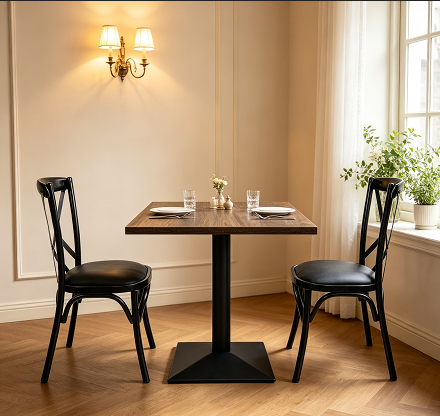
| Clean angular lines, sharp-edged profile | 80–140 cm square / rectangular tables | Modern industrial, designer brands |
Popular Cast Iron Table Base Styles
| Style Name | Design Features | Compatible Tabletop Size | Target Market |
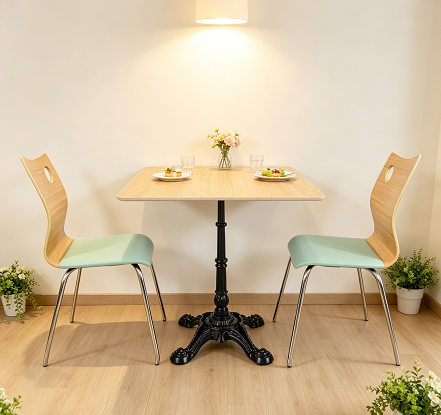
| Three or four-footed animal claw design with fine carving | 80–120 cm round tables | Classic luxury, American vintage | |
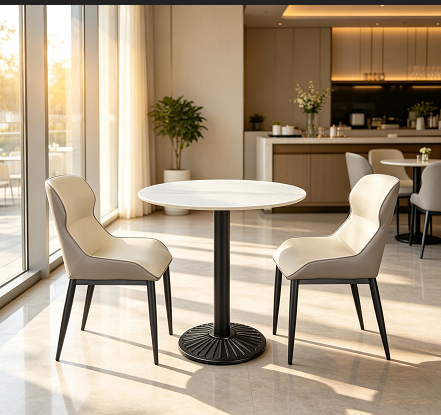
| Minimalist thick disc + bold tubular column; no extra ornamentation | 60–100 cm round tables | Industrial restaurant, loft spaces |
Conclusion: Choose Based on Your Needs
There is no absolute winner between iron stamping and cast iron bases — the key is matching them to your business requirements:
| Decision Factor | Choose Iron Stamping If… | Choose Cast Iron If… |
| Core Priority | You value design variety, cost control, and logistics efficiency | You need ultimate load capacity, extended lifespan, and premium quality |
| Target Market | Mass residential, light commercial, e-commerce retail, fast-fashion furniture | High-end dining, luxury furniture, heavy-duty commercial, outdoor commercial |
| Tabletop Match | Sintered stone, glass, MDF — light to medium weight | Marble, thick solid wood — high weight |
Order Volume | 50–100 units MOQ; small-to-medium batch friendly | 150+ units MOQ; ideal for stable high-volume orders |
End User Profile | Values DIY-friendly installation and trendy design | Values product heft and substance; comfortable with professional installation |
Our Recommendation
For most wholesalers and furniture brands,"iron stamping as the volume driver, cast iron as the differentiator" is the optimal product mix strategy — use iron stamping bases for your core volume products, and cast iron bases to capture the high-margin premium market. Together, they cover a broader customer base.
Looking for Reliable Iron Stamping & Cast Iron Table Base Suppliers?
We offer a full range of custom iron stamping bases, wrought iron table legs, and cast iron bases with OEM/ODM support.
Flexible MOQs, factory-direct pricing, and global shipping.
📞 WhatsApp: +86 17841353079
📧 Email: aeonti@aeonti.com
🌐 Website: www.aeonti.com