Reverse Engineering Table Legs from Existing Furniture: OEM Service for Replacement Parts and Restorations
- Share
- publisher
- Zoey
- Issue Time
- May 29,2026
Summary
Need replacement legs for an older furniture line but original factory closed? aeonti offers reverse engineering – 3D scanning, CAD modeling, and precision casting to replicate any table leg. Perfect for hotel restoration projects, legacy product support, and vintage furniture brand owners.
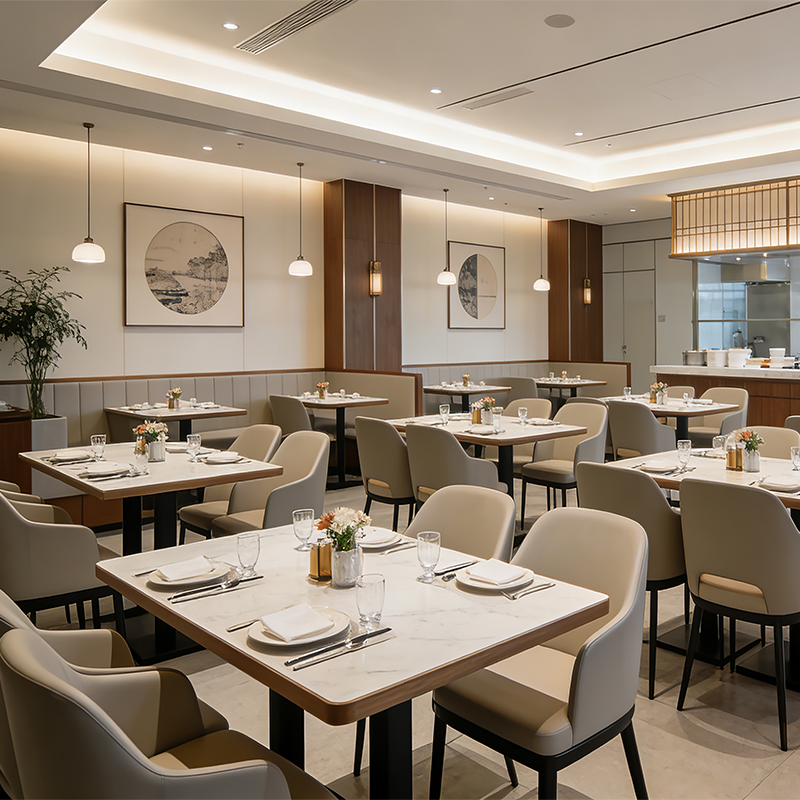
A hotel renovation team in Europe once faced a 200-leg replacement order for a 15-year-old lobby furniture line. The original supplier had long since closed, the original tooling was gone, and the only thing left in the building was a single physical leg. Replacing the entire furniture set would have cost the project seven figures and lost the historical design language the brand was built on. Reverse engineering that single leg into a reproducible production part saved the project — and that kind of problem is more common than most buyers realize.
This guide is for procurement managers, project contractors, hotel chain renovation teams, and brand owners who need to source replacement legs for an older furniture line when the original supplier is gone, the mold is lost, or the design is no longer in production. It covers what reverse engineering means in this specific context, the 5-step workflow used in practice, the technical capability and tolerances involved, two real case examples, and how to evaluate whether a foundry is the right partner for the job.
1. Why Furniture Replacement Parts Become Hard to Source
Commercial furniture has a typical service life of 10 to 25 years. The legs almost always outlive the original supplier relationship — a furniture brand changes ownership, a foundry consolidates or closes, a mold gets scrapped because the SKU was discontinued, or a regional supplier exits a market. The furniture itself is still on the floor and still in use. The support network around it is not.
When a single leg breaks in that situation, the buyer has four options: replace the entire furniture set, find a used or refurbished leg from the secondary market, commission a custom one-off (expensive and slow), or have the original leg reverse-engineered and reproduced. For brand owners and operators with more than a handful of pieces, the reverse-engineering route is usually the only one that respects the original design intent, the project budget, and the project timeline.
2. Four Scenarios Where Reverse Engineering Becomes Necessary
Reverse engineering of table legs is not a generic product. It is a project-based service for very specific situations. The four scenarios below cover most of the requests a commercial-grade foundry will see.
2.1 Legacy restaurant booths and built-in banquet seating
Booth legs and banquette frames are often cast as one-off custom pieces for a specific restaurant interior. The original interior designer may have worked with a small regional foundry that no longer exists. When the booth frame cracks after 12–15 years of service, replacing it with anything other than the original design changes the entire room.
2.2 Vintage furniture brands wanting modern production of old molds
Some brands own a historical design from the 1970s or 1980s that still sells into hospitality projects but is no longer actively produced. The original tooling has degraded or been scrapped. To restart the SKU without losing the design language, the brand needs a foundry that can scan an original piece, recreate the mold digitally, and produce small batches on demand.
2.3 Hotel and restaurant restoration projects requiring exact historical match
Renovation projects for heritage hotels, listed buildings, and design-led restaurant brands often come with a hard requirement: replacement parts must be visually indistinguishable from the original. Even small differences in foot plate shape, column profile, or finish disrupt the design language. Reverse engineering is the only way to hit that standard.
2.4 Broken legs on existing furniture where the supplier is gone
The most common case: a chair or table leg breaks in service, the operator calls the original brand, and the brand either no longer carries the SKU or no longer exists. The operator needs one leg (or a small batch of 10–50) to keep the rest of the furniture set on the floor.
3. The 5-Step Reverse Engineering Workflow
A serious reverse engineering project follows a defined five-step sequence. Skipping a step is the single most common reason a reproduction leg fails to match the original — usually because the cast alloy or the surface finish was not characterized before tooling was cut.
3.1 Step 1 — 3D scanning the original part
The first step is to capture the geometry of the original leg as a digital 3D model. Modern commercial-grade 3D scanners use structured light or laser line technology and can resolve surface details down to a fraction of a millimeter. The scanner produces a dense point cloud (typically millions of points) that is then converted into a triangulated mesh representing the exact outside surface of the original.
Two practical notes for buyers:
• You do not need to destroy the original. Scanning is non-contact. The original leg can be a working part on the floor, a sample sent by courier, or a piece photographed in place.
• Capture the mounting holes and the underside. The scanner only sees what it can see. If the foot plate is bolted to the table or hidden against a surface, the underside and bolt circle need to be exposed for one scan.
The output of step 1 is a digital mesh file that can be reviewed, measured, and imported into CAD software for the next step.
3.2 Step 2 — CAD modeling and engineering review
The mesh from step 1 is not directly usable for production. It needs to be converted into a parametric CAD model — typically in SolidWorks, Fusion 360, or equivalent — that can be dimensioned, modified, and exported to manufacturing tooling formats. This is where engineering judgment comes in.
A good foundry will use this step to flag three things:
• Original design weaknesses. Many legacy legs have thin column walls, sharp internal corners, or inadequate foot plate thickness that caused the original to fail. The reproduction is an opportunity to reinforce those areas without changing the visible geometry.
• Draft angles for casting. Cast parts need slight draft on every vertical face so the part releases cleanly from the mold. The original may have been machined after casting, hiding the draft. The CAD model needs to incorporate the right draft for the chosen casting method.
• Mounting interface compatibility. If the original leg bolts to a tabletop with M8 or M10 fasteners at a specific pattern, the reproduction must match that pattern exactly. Otherwise the new leg will not fit the existing furniture.
The buyer reviews and approves the CAD model before any tooling is cut. This is the right moment to request small changes — a thicker foot plate, a different mounting bolt pattern, a brand stamp on the underside.
3.3 Step 3 — Material analysis and alloy matching
Reproducing the geometry is only half the job. The reproduction must also match the original alloy closely enough that plating, welding, and finishing behave the same way. The standard tool for this is a portable X-ray fluorescence (XRF) spectrometer or an optical emission spectrometer (OES), which identifies the alloy composition on the original in seconds without damaging the part.
The two most common alloy families for table legs are:
• Cast iron (gray or ductile) — used for heavier traditional designs, lobby seating, banquet tables. Identified by family designations such as GG20 / GG25 (gray) or GGG40 / GGG50 (ductile).
• Cast aluminum — used for mid-century modern designs, lighter restaurant chairs, and outdoor furniture. Common designations include A380, A356, and ADC12. The exact alloy matters for plating adhesion and weldability.
• Stainless steel and brass — less common for legs but seen on high-end hospitality furniture. Stainless is usually 304 or 316 grade; brass is often a cast bronze or sand-cast brass alloy.
If the buyer is happy with the original alloy, the foundry matches it. If the buyer wants a material improvement (for example, switching from gray cast iron to ductile iron for impact resistance — see the related guide on cast iron vs ductile iron), the CAD model and the casting process are adjusted accordingly.
3.4 Step 4 — Rapid tooling and first article samples
Once the CAD model and alloy are approved, the foundry cuts the tooling for the chosen casting process. For most table leg reproductions, the choice is between three methods:
• Sand casting — the most flexible method, suitable for one-offs, small batches, and complex shapes. Tooling is a wooden or resin pattern, lead time is short, and per-part cost is higher than other methods.
• Die casting (for aluminum) — used for higher volumes of aluminum parts. Tooling is a steel die, lead time is longer, and per-part cost drops sharply with volume.
• Investment casting (lost wax) — used for stainless and brass reproductions where surface detail matters. Tooling is a wax pattern set, lead time is moderate, and per-part cost is the highest of the three.
The foundry produces a small number of first article samples for buyer approval. First article timing depends on part complexity, alloy, and casting method — simple aluminum reproductions can be ready in 2–3 weeks, while complex stainless steel investment castings take longer. Most projects see first article approval within 3–5 weeks from CAD sign-off.
3.5 Step 5 — Production, surface finishing, and shipping
After first article approval, production runs to the order quantity. For replacement leg projects, order quantities are typically much smaller than standard wholesale runs — anywhere from a single leg to a few hundred. The finishing process is matched to the original as closely as possible:
• Powder coating to a specific RAL or Pantone color reference.
• Brushed, polished, or antiqued finish for stainless and brass reproductions.
• Patina or aged finish for heritage projects where the new parts need to blend visually with the older surrounding furniture.
• Custom mounting hardware (bolts, threaded inserts, glides) to match the original furniture interface.
Production timing for restoration projects is typically 25–35 working days from first article approval for batches under 500 pieces, and 30–45 days for larger runs. This is somewhat longer than a standard wholesale table base order because the production line is set up specifically for the project rather than running a stock SKU.
4. Tolerances, Files, and Technical Capability
Buyers evaluating a foundry for reverse engineering work should ask about three technical points. None of them is a hard commitment, but they should all be in the conversation.
4.1 Dimensional accuracy
Modern industrial 3D scanners typically resolve surface geometry to within 0.05–0.2 mm, depending on the part size, surface finish, and scanner class. The resulting cast part tolerance is wider than the scan tolerance — iron and aluminum castings typically hold ±0.3–1.0 mm on overall dimensions, with tighter tolerance on machined features like mounting holes. The right number for any given part depends on the casting method, the alloy, and the feature being measured.
For most commercial furniture reproductions, the relevant tolerance is on the mounting interface (must match existing bolt patterns and table top fittings) and on overall height (must match the rest of the furniture set). Cosmetic surfaces can run wider tolerance without visible impact.
4.2 File formats and ownership
Standard output formats from a serious reverse engineering project include STEP, IGES, Parasolid, and STL. STEP and IGES are the formats used directly by CAD software and by machining tools. STL is the format used by 3D printers and is also commonly requested for archival purposes. The buyer should retain ownership of the CAD model and the mesh files after the project — the part may need to be reproduced again years later, and ownership of the digital files should not depend on the foundry relationship.
4.3 Scan volume and part size limits
Industrial 3D scanners have practical limits on the part size they can capture in a single setup. For most table leg and furniture base projects, scan volume is not a constraint — a typical tripod or robotic-arm setup can capture parts from a few centimeters up to a couple of meters in any dimension. For unusually large pieces (oversized banquet columns, conference table bases, custom architectural elements), the part may need to be scanned in multiple setups and the resulting scans aligned in software. This is routine work but it should be discussed upfront if the part is unusually large.
5. Two Real Case Examples
The two cases below are typical of the projects foundries handle. The names of the operators and brands are not disclosed, but the project structure, the constraints, and the outcome pattern are representative.
5.1 European hotel chain — 200 replacement legs for a 15-year-old lobby line
A European hotel chain undertook a phased renovation of its flagship property. The lobby furniture was a custom design from a small regional foundry that had closed several years earlier. The renovation team needed 200 replacement legs — the originals had developed hairline cracks at the column-to-foot-plate weld after 15 years of cleaning-cart impacts. The full furniture replacement was budgeted at seven figures and would have required a redesign that broke the historical design language of the property.
The project shipped a single original leg to the foundry. The foundry produced a 3D scan, identified the original alloy as ductile iron, flagged the original column wall thickness as below current best practice, and proposed a CAD model that reproduced the original geometry but added a thicker wall at the known failure point. The buyer approved, tooling was cut, and 200 legs were produced and shipped within the renovation timeline. The reinforced wall addressed the original failure mode without changing the visible design.
5.2 US furniture brand — 500-piece replacement run to save a discontinued SKU
A US-based furniture brand had a best-selling cast iron table base that had been discontinued two years earlier. The original tooling had been scrapped when the SKU was retired, but the brand still received regular reorders from existing hospitality customers who wanted matching extensions to their installed base. Rather than redesigning the leg or losing the customers, the brand shipped one customer-returned leg to a foundry for reverse engineering.
The foundry scanned the leg, recreated the tooling, and produced a 500-piece replacement run. The new legs were visually identical to the original and were accepted by the brand's existing customer base. The brand avoided discontinuing the line for that customer segment, and the foundry retained a long-term production relationship for ongoing replacement orders.
6. What to Prepare Before Requesting a Quote
A reverse engineering quote depends on more than the part itself. The clearer the brief, the more accurate the quote and the shorter the lead time. Six items to prepare:
1.The original part, or a high-resolution photo set covering every angle and the underside. If the original is installed, a site visit or a mobile scan may be needed.
2.The order quantity, even if it is small. Restoration work can be as low as a single leg, but the per-part cost is higher than a standard wholesale run.
3.The target alloy (match original, or upgrade to ductile iron / aluminum / stainless).
4.The surface finish requirement (powder coat color, brushed, polished, patina).
5.The mounting interface detail — bolt pattern, thread size, glide type, height from floor to mounting plate.
6.The timeline, including any milestone dates tied to a project handover or a guest opening.
7. Frequently Asked Questions
7.1 Can any table leg be reverse engineered?
Most cast-metal leg designs can be reproduced. Parts with very complex internal structures, parts made from non-castable materials (solid wood, bent tubing), and parts with proprietary mechanisms inside may need a different approach. A quick scan and a CAD review will tell you whether your part is a candidate.
7.2 Does reverse engineering require destroying the original?
No. The 3D scan is non-contact and non-destructive. The original leg can be a working part on the floor or a single sample. For material analysis, a small grinder touch on a non-visible surface is sometimes used, but XRF spectrometry is also non-destructive in practice.
7.3 Who owns the CAD model after the project?
The buyer should retain full ownership of the CAD model, the mesh files, and any drawings produced during the project. The foundry uses the model to produce the order, but the digital files belong to the buyer. Specify this in the project agreement before tooling is cut.
7.4 Is reverse engineering more expensive than a standard table base order?
Per-part, yes — restoration projects do not benefit from the economies of scale of a stock wholesale run, and the project carries a one-time engineering and tooling cost. Total project cost is usually lower than replacing the entire furniture set, and the design language is preserved.
7.5 Can the reproduction be improved during the project?
Yes, and it usually should be. The CAD review step is the right moment to thicken a thin wall, change a mounting bolt pattern, switch alloys for better impact resistance, or update the finish for easier maintenance. These changes are usually invisible to the end user but extend the service life of the reproduction significantly.
7.6 How do I find a foundry for this kind of work?
Look for a foundry that has an in-house 3D scanning capability (or a partner scanning service it works with regularly), in-house CNC pattern-making, and a casting process that matches your target alloy. Ask for one or two reference projects in the same alloy family as your part.
8. About AEONTI
AEONTI is a commercial table base and table top manufacturer based in Foshan, China, with an 8,000 m² production facility. We produce wholesale table bases, table tops, dining tables, and dining chairs for importers, project contractors, restaurant owners, and global brands across North America, Europe, the Middle East, and Australia. Our standard product range covers the four product lines — table bases, table tops, dining tables, and dining chairs — with table bases offered in cast iron and ductile iron, table tops in sintered stone, melamine-faced board, HPL, and solid wood, and OEM / private label production supported across the range.
Alongside our standard wholesale work, we run a legacy table base replication service for buyers who need to source replacement parts for furniture lines whose original supplier is no longer available. The service covers 3D scanning of an original part, CAD modeling and engineering review, alloy matching via spectrometer analysis, tooling and sample production, and small-to-medium batch production (typically 50 to 2,000 pieces per project). Reverse engineering and production are quoted as separate line items so the procurement approval path is straightforward.
For restoration projects, quantities and lead times are evaluated on a project basis rather than against a fixed MOQ — we recognize that a 50-leg replacement order for a heritage hotel cannot be priced the same way as a 5,000-leg wholesale run. Standard wholesale orders remain at MOQ 100 sets with 25–30 day lead time; restoration projects typically run 30–45 days from CAD approval depending on alloy and complexity. Sample legs of both cast iron and ductile iron are available on request for evaluation against an existing piece.
To start a reverse engineering project, send the original leg (or detailed photographs from every angle including the underside and any mounting interfaces), the order quantity, the target alloy and finish, and the project timeline. We respond with a feasibility note, a preliminary CAD review, and a two-line-item quote — one for the engineering and tooling, one for the production batch.
Reach out to AEONTI — start with table built to last.
Contact AEONTI today to request samples and a quotation, and start your next procurement project with confidence.
📞 WhatsApp: +86 17841353079
📧 Email: aeonti@aeonti.com
🌐 Website: www.aeonti.com