Which Commercial Table Bases Suit the US Market? What American Wholesalers Should Really Focus On
- Share
- publisher
- AEONTI
- Issue Time
- Nov 6,2026
Summary
Which commercial table bases actually suit the US market? This B2B sourcing brief covers heavy-duty structure, real stability versus metal thickness, multi-size and multi-height matching, black metal finishes, custom OEM/ODM options, total landed cost, knock-down export packing and repeat-order consistency, plus the 7 questions US wholesalers should ask before ordering table bases wholesale.
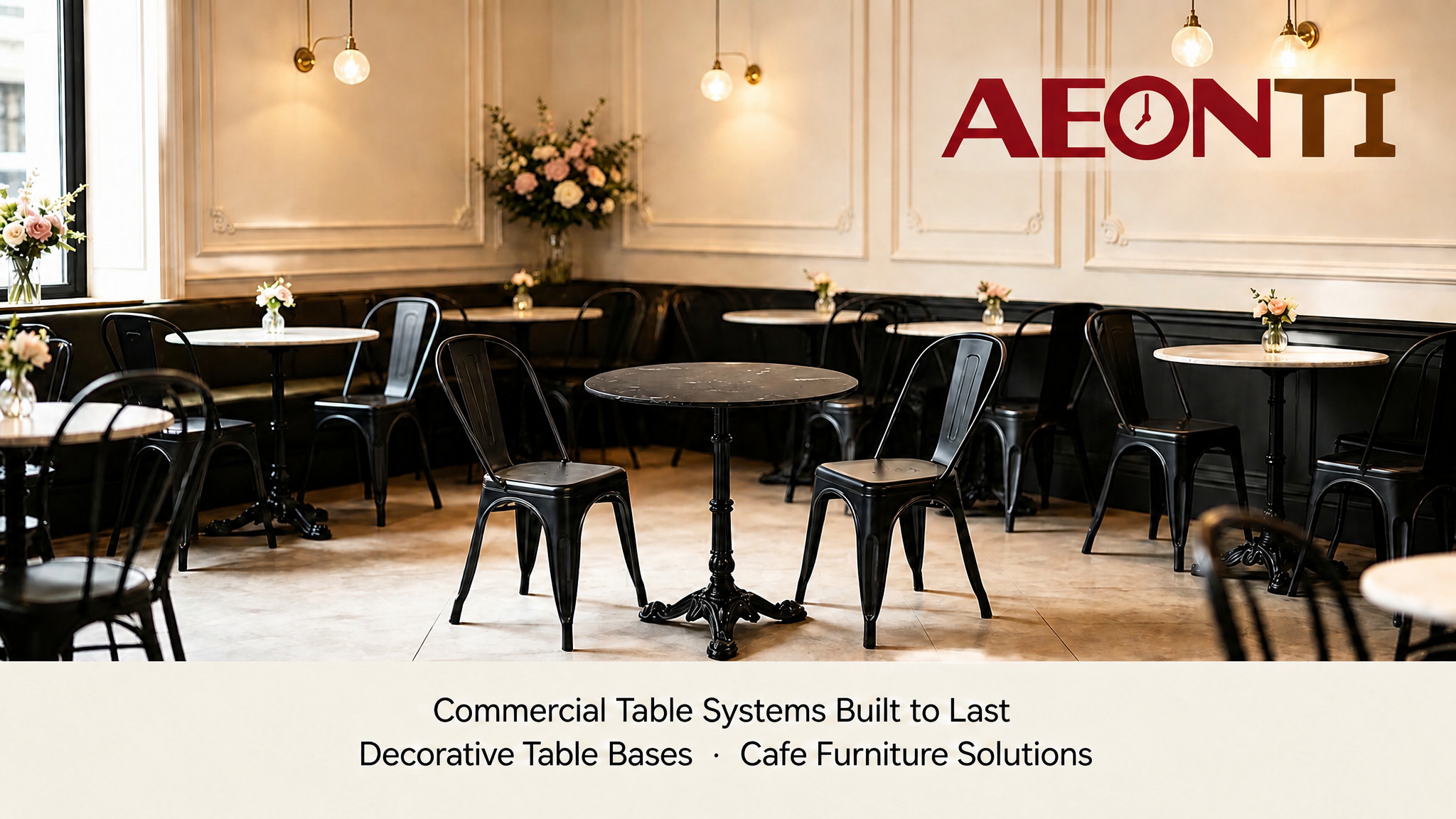
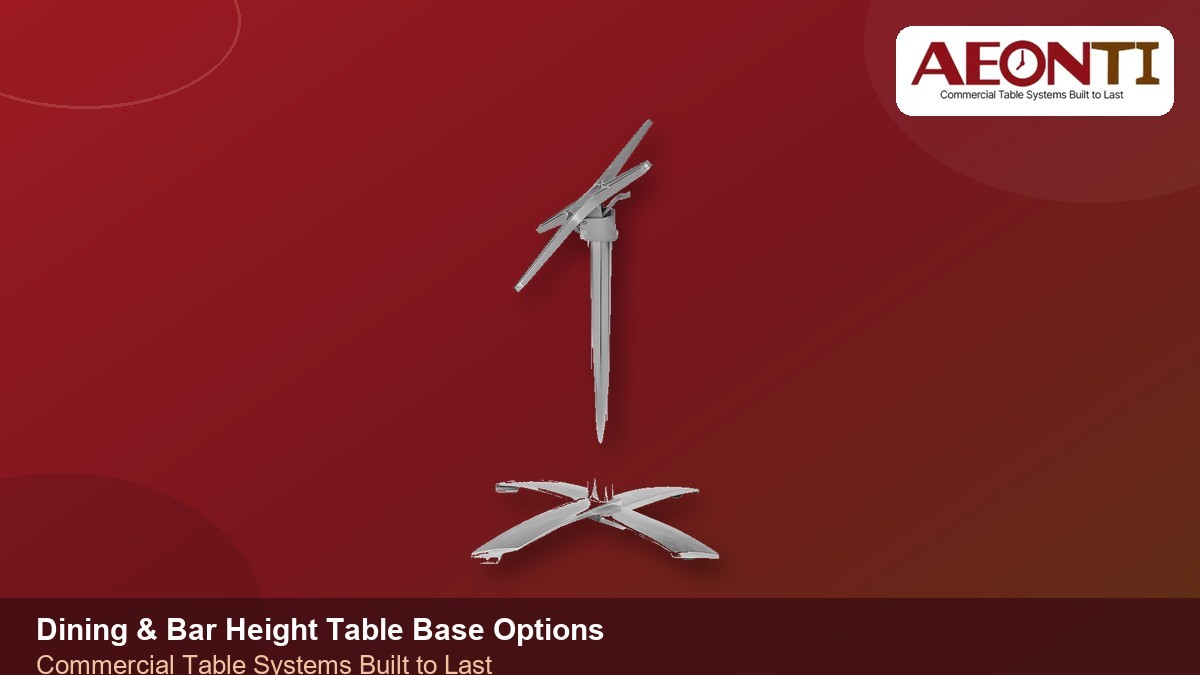
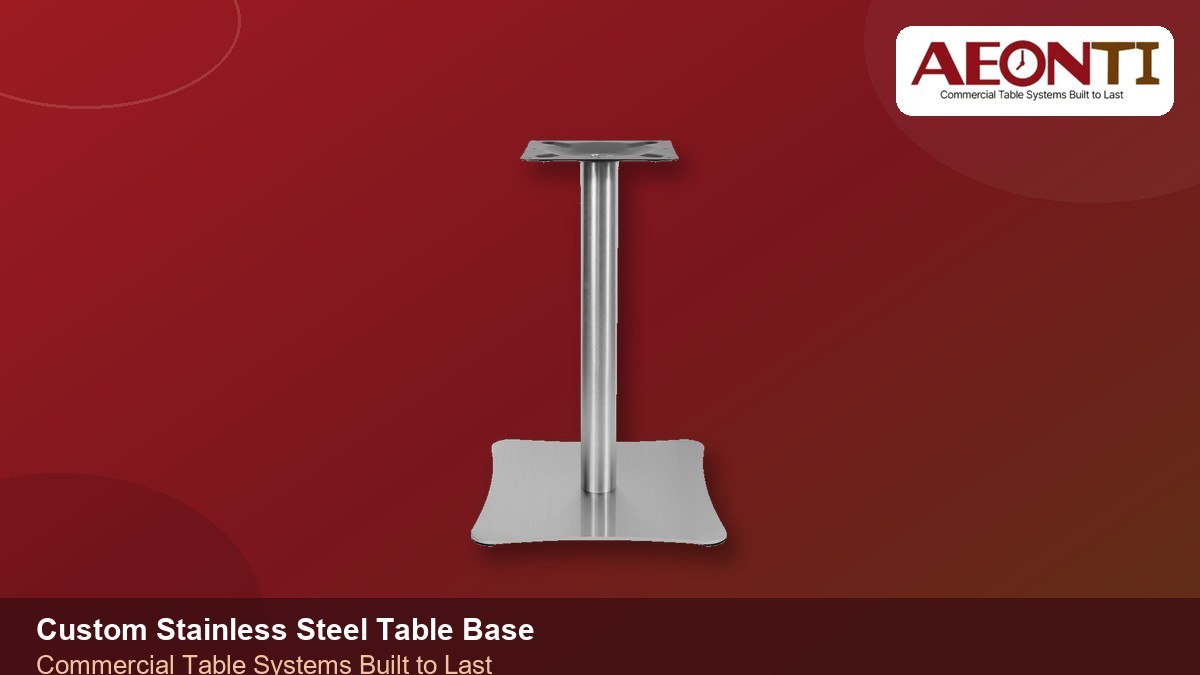
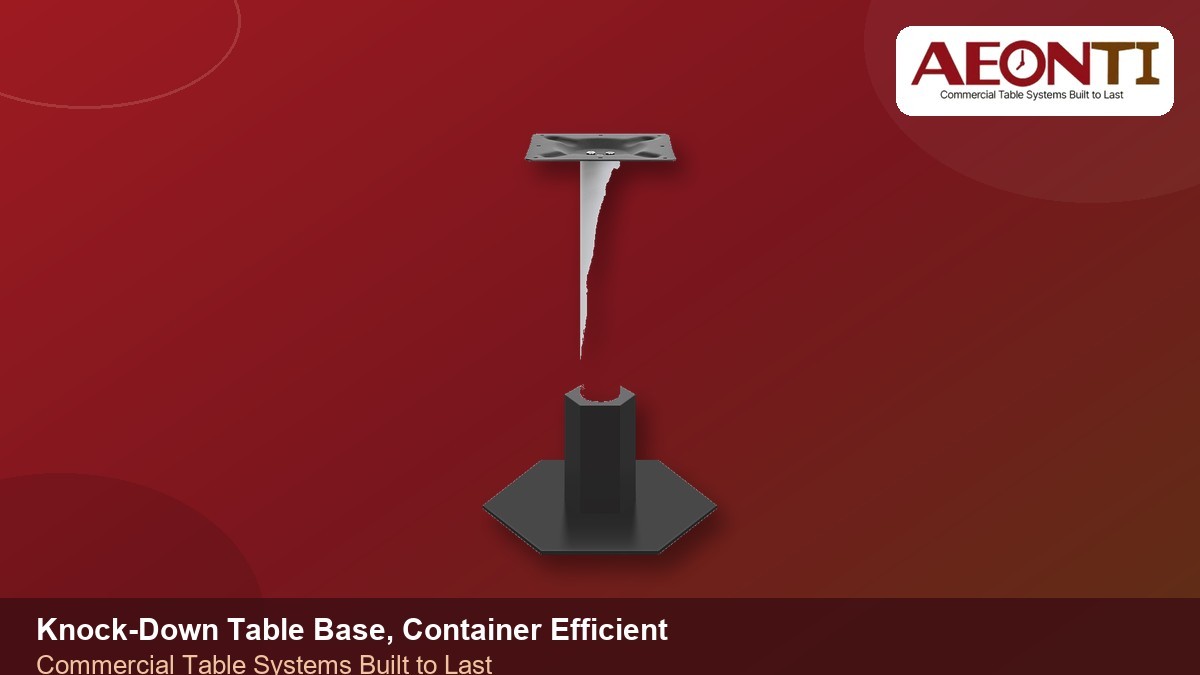
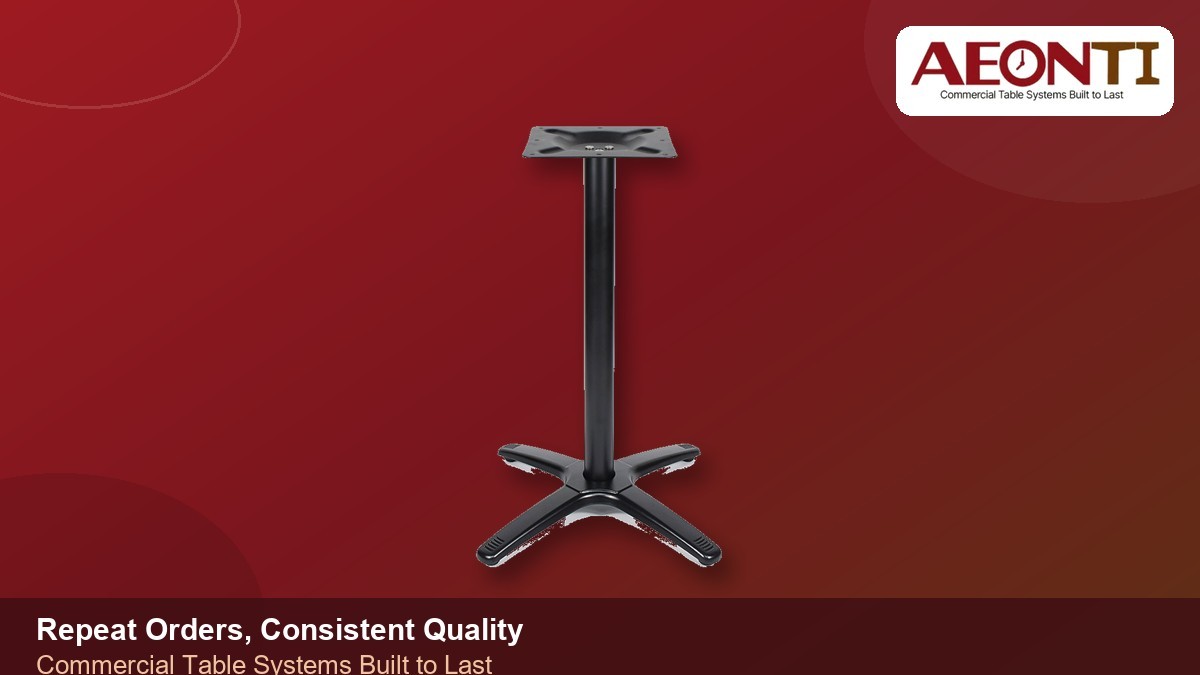
US MARKET SOURCING BRIEF FOR WHOLESALERS AND PROJECT BUYERS For US restaurants, coffee shops, hotels, furniture dealers, wholesalers and commercial project buyers, whether a set of commercial table bases is worth purchasing rarely comes down to appearance alone. What they care about is whether it survives high-frequency commercial use, whether it matches tabletops of different sizes, whether quality stays consistent across a bulk order, whether ocean freight brings deformation or damaged packaging, whether the supplier supports special project sizes, and whether the next replenishment order can be produced exactly like the first. So if you are sourcing commercial table bases for the US market, the real question is not which table base looks the best, but: US commercial dining environments are nothing like household furniture. Tables in restaurants, coffee shops, bars, hotels and commercial spaces may be used intensively by different customers every single day. They face high-frequency use, tabletops of different weights, frequent repositioning, slightly uneven floors, long-term static loads, food and drink spills, repeated cleaning with commercial detergents, and everyday collisions in busy spaces. A table base suited to the US commercial market therefore cannot only hold up a tabletop. It must deliver stability, load capacity, durability, easy installation, easy bulk purchasing, easy shipping and long-term replenishment. This is exactly why US wholesalers prefer manufacturers with mature production capability over suppliers who only offer a low price. If your customers are restaurants, hotels, bars, coffee shops or commercial projects, heavy duty commercial table bases deserve a permanent place in your product line. Why? Because commercial scenarios demand stability first, especially for large dining tables, long conference tables, bar tables, outdoor commercial tables, large restaurant tables and high-traffic public spaces. If the table base structure is too light, the tabletop will wobble in daily use. For a restaurant owner that is not just a product problem: one unstable table can damage the guest experience, spill drinks, drop cutlery or even break the tabletop itself. Common choices include cast iron table bases, iron table bases, stainless steel table bases and aluminum table bases. No single material is absolutely the best, and the right choice depends on tabletop size, application, load requirement and budget. Many buyers assume the thicker the table base, the more stable it is. Not exactly. Table base stability depends not only on material thickness but also on base dimensions, support structure, tube size, welding method, mounting plate size, tabletop size, and the match between the table base and the tabletop. For example, a large rectangular top supported by one undersized center base may never feel stable, no matter how thick the metal is. The US restaurant and commercial furniture market does not run on a single table size. Common tops include round, square, rectangular, bar height and dining height. If you are a furniture wholesaler or commercial furniture dealer, a truly valuable supplier should offer table bases in many specifications, not just one or two fixed models. Ideally, one table base series can be adapted to different tops with different heights, base dimensions, mounting plates, colors, surface finishes and load ratings. A product system like this matters more to wholesalers than any single model, because you will not need to find a different supplier for every different customer, and one stable supply chain reduces your procurement management cost. Browse US restaurants, coffee shops, bars and commercial interiors and one trend is impossible to miss: black metal table bases blend into commercial spaces effortlessly. Black powder coated table bases, matte black table bases, black cast iron table bases and black steel table bases pair easily with wooden tops, HPL tops, sintered stone, engineered marble, dark tops and light tops alike. The advantage of black is not simply that American buyers like black. Black adapts to the widest range of commercial design styles, including industrial, modern, minimalist and contemporary, which is why black metal table bases usually give US wholesalers the broadest application range and the fastest inventory turnover. If your customers are furniture brands, design firms or upscale commercial projects, offering only black is not enough. Different projects may require stainless steel, brushed finish, polished finish, custom powder coating and other custom finishes. Hotels, boutique restaurants and high-end commercial spaces in particular demand more from the visual effect of a table base. A supplier truly suited to the US market should therefore support a certain level of OEM / ODM / custom finish capability. So when evaluating a factory, do not only ask how much the table base costs, ask what customization options it can support. Suppose two suppliers quote $30 and $34 for the same table base. Most buyers instinctively choose the cheaper one. But if the cheaper supplier's packaging leads to bigger carton volumes, fewer sets per container, higher transit damage rates and lower packing efficiency, the final procurement cost can be completely different. This is why B2B purchasing cannot stop at unit price. It must evaluate total landed cost, the full cost of the product arriving at its destination. For the US market this is especially true, because ocean freight, packaging, container loading efficiency and destination port charges all eat into the final margin. If a commercial table base can be reasonably split into parts for packing, bulk export gains obvious advantages. Flat-pack and knock-down design helps optimize packaging dimensions, container utilization, warehouse space and freight cost. But there is one precondition: shipping space must never be saved at the expense of table base stability. A truly good design balances structural stability, packaging efficiency and installation convenience, a balance that matters enormously to US wholesalers and commercial project buyers. The first order goes well: the sample is good, the color is good, the dimensions are fine, so you place an order for 1,000 sets. Six months later you need a replenishment order, and the second batch shows a different color, changed tube specifications, different welding details, moved mounting hole positions, inconsistent surface finishing or dimensional deviation. This is where the real trouble begins. Your customers may already have installed the first batch in restaurants, hotels or a furniture collection. If the second batch does not match, the visual and installation effect of the entire project is compromised. If one answer must be given, it is this: the right table base for the US market is not a single fixed style, but a product system that delivers stability, durability, size matching, customization and bulk-order readiness across different commercial scenarios. US wholesalers and project buyers should focus on the following purchasing criteria: Screen every potential supplier against this list before the first bulk order, not after the first claim. Before placing a bulk order, send these questions directly to any supplier you are evaluating: A supplier who answers all seven clearly and specifically is at least worth a deeper evaluation. The best commercial table base for the US market is not one model. It is a supplier system that stays stable from the first sample to the thousandth set. The core of table base purchasing is not finding the lowest price, it is finding a table base manufacturer who can supply stably for the long run. AEONTI specializes in commercial dining tables and table base systems for wholesalers, furniture dealers, restaurant furniture suppliers and commercial project buyers. No need to start with a big order. Send your tabletop size, estimated quantity, application, target price and preferred color or finish, and AEONTI will match the right commercial table base for your project and provide a quotation, typically within 24 hours.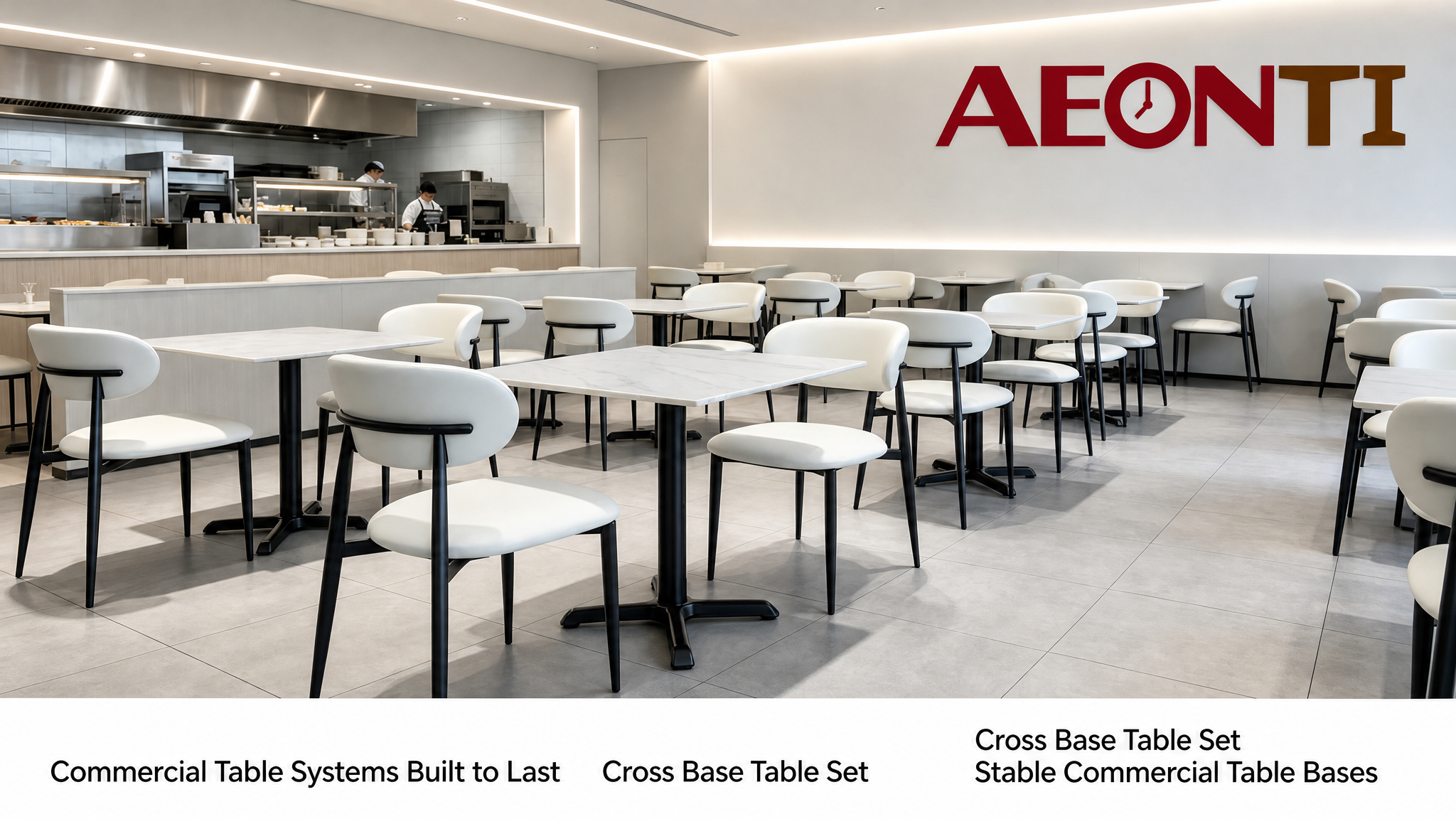
01Why the US Market Demands More from Commercial Table Bases
02Option One: Heavy-Duty Metal Commercial Table Bases
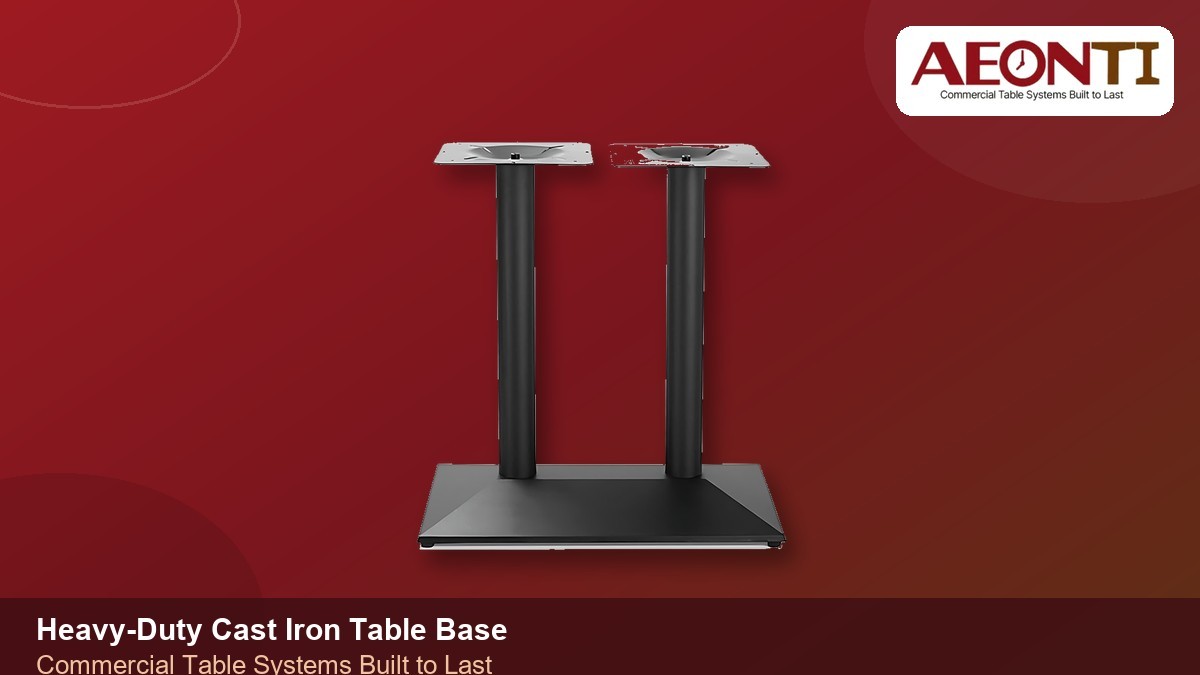
03Option Two: Stability Is Not Just About How Thick the Metal Is
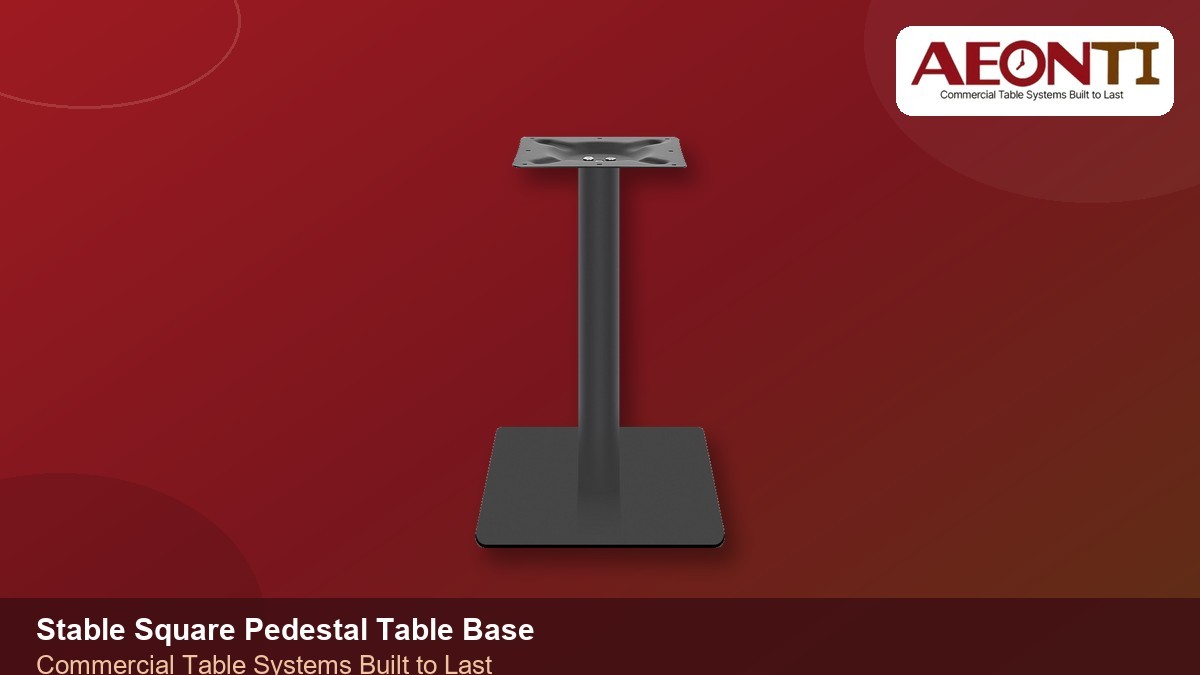
04Option Three: US Buyers Need Table Bases in Multiple Sizes
05Option Four: Why Black Metal Table Bases Fit US Commercial Furniture
06But the US Market Is Not Only About Black Table Bases
07The Problem US Wholesalers Overlook Most: Landed Cost
08Why Knock-Down Design Matters So Much to US Wholesalers
09What US Buyers Fear Most Is Not the First Order, It Is the Second
10So Which Commercial Table Base Suits the US Market Best?
Purchasing Criterion Why It Matters Heavy-Duty Structure Survives high-frequency commercial use Stable Base Design Reduces table wobble in daily service Multiple Sizes Matches round, square and rectangular tops Multiple Heights Covers dining and bar applications Durable Finishes Withstands long-term commercial use Custom Options Fulfills different project requirements Efficient Packaging Cuts freight and warehousing cost Consistent Quality Enables smooth repeat orders OEM and ODM Support Supports brand and project development Export Experience Reduces international purchasing risk 117 Questions to Ask Before Ordering Table Bases for the US Market
Question What It Reveals What table sizes can this base support? Whether the table base matches your tabletop program What materials and tube specifications are used? Whether material specs are honest and traceable What finishes are available? Whether the range covers your market styles Can you customize the size or mounting plate? Whether special project requirements are welcome How are the bases packaged for export? Whether transit damage is under control How many sets fit in a 20GP or 40HQ container? Whether the supplier thinks about your landed cost Can you guarantee consistency for repeat orders? Whether the partnership can scale safely Sourcing Commercial Table Bases for the US Market?