What is the MOQ for custom iron stamping table bases from Chinese manufacturers?
- Share
- Issue Time
- Jul 3,2026
The MOQ for Custom Iron Stamping Table Bases Typically Starts at 200 to 500 Pieces
The minimum order quantity for custom iron stamping table bases from Chinese manufacturers varies based on two key factors: whether you are ordering an existing catalog design or requesting a new custom shape that requires stamping die development. For standard designs already in production, the MOQ usually ranges from 50 to 200 pieces. For fully custom OEM designs requiring new tooling and progressive dies, the MOQ typically starts at 300 to 500 pieces, sometimes reaching 1,000 pieces for complex geometries with tight tolerances.
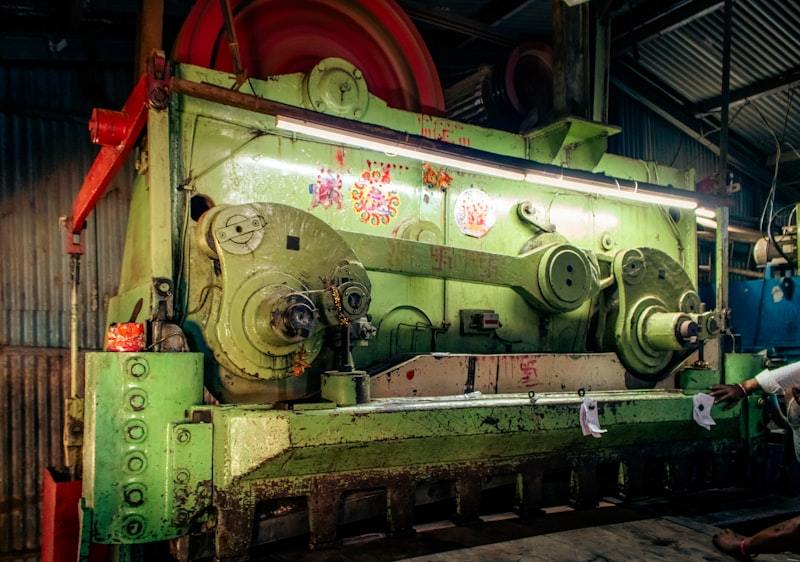
The MOQ threshold exists because custom stamping requires a one-time investment in tooling (stamping die), which must be amortized across a sufficient production volume to keep unit costs competitive. AEONTI, as a direct manufacturer with in-house stamping capabilities, offers flexible MOQ structures that accommodate both trial orders for new buyers and high-volume production runs for established wholesalers.
What Determines the MOQ: Three Factors Buyers Must Understand
1. Stamping Die and Tooling Cost
Every custom stamping shape requires a dedicated die. A simple single-operation die for basic flat stamping costs roughly $500 to $2,000. A progressive die with multiple stations (piercing, bending, forming) for complex table base geometries can cost $3,000 to $8,000+. This tooling cost is a one-time investment; once the die is built, subsequent production runs reuse the same die with minimal wear. Higher MOQ requirements ensure the per-unit tooling cost remains reasonable. For example, a $5,000 die amortized across 500 units adds $10 per unit; across 2,000 units, it drops to $2.50.
2. Production Volume and Die Type
Low-volume orders (below 300 units) typically use simpler dies with more manual handling, resulting in slightly higher per-unit labor cost. High-volume orders (500+ units) justify progressive dies with automated feeding, which reduce per-unit cost, improve repeatability, and shorten delivery time. For buyers testing a market, starting with a lower MOQ using a simpler die is practical; scaling up later allows investment in progressive tooling for cost reduction.
3. Material, Tolerance, and Surface Finish
Thicker steel (3mm vs 1.5mm) requires higher press force and more robust dies. Tight dimensional tolerances demand better die machining and more inspection during tryout. Visible surface finishes (for exposed decorative bases) need scratch-control handling and deburring steps. Each additional specification raises the minimum viable production quantity because setup and quality control costs must be spread across enough units. Standard commercial tolerances and common surface finishes keep MOQs lower.
MOQ Comparison: Standard vs. Semi-Custom vs. Full Custom OEM
| Order Type | Typical MOQ | Tooling Required | Lead Time | Best For |
|---|---|---|---|---|
| Standard catalog design | 50-200 pcs | None (existing die) | 15-25 days | First-time buyers, trial orders |
| Semi-custom (color/finish change on existing shape) | 100-300 pcs | None or minor setup | 20-30 days | Brand differentiation, seasonal colors |
| Full custom OEM (new shape, new die) | 300-1,000 pcs | New stamping die ($500-$8,000+) | 35-50 days (includes die development) | Exclusive designs, proprietary shapes |
AEONTI maintains a catalog of over 50 existing iron stamping base designs with dies already in production, allowing new buyers to start with low MOQs on standard shapes. For brands needing exclusive designs, AEONTI's in-house engineering team develops progressive dies with DFM review, sample approval, and production ramp-up within 35 to 50 days. Factory-direct pricing eliminates the markup that trading companies add to both tooling and unit costs.
Steps to Place a Custom Iron Stamping Table Base Order
Send Technical Requirements
Provide 2D drawings (PDF/DWG), 3D files (STEP/SolidWorks), material grade, thickness, surface finish, and expected annual volume. Include critical dimensions separately from non-critical ones to help the factory optimize the die.
Receive DFM Review and Quotation
The factory reviews manufacturability: bend radius feasibility, hole placement relative to edges, material utilization in strip layout, and tolerance achievable with the proposed die type. You receive a quotation covering tooling cost, unit price at your target MOQ, and estimated lead time.
Approve Die Development and Samples
After approving the quotation, the factory builds the die and produces first samples. You review dimensions, surface quality, and structural integrity. Minor adjustments (springback correction, burr limits) are normal in this phase.
Production and Shipment
Once samples are approved, batch production begins. For a 500-piece order of a moderate-complexity base, production typically takes 15 to 25 days after sample approval. Packaging follows export standards (individual poly bag + carton + pallet), with full QC documentation.
Practical Tips to Reduce MOQ and Cost
- Start with an existing shape and customize only the finish or color. This eliminates tooling cost entirely and reduces MOQ to 50-200 pieces.
- Separate critical and non-critical dimensions. Overly strict tolerances on every dimension raise die cost and MOQ. Specify tight tolerance only where assembly demands it.
- Share your annual volume forecast. Factories adjust unit pricing based on expected lifetime volume. Even if your first order is 300 pieces, stating a 5,000-piece annual forecast may unlock better pricing and lower MOQ.
- Ask about die ownership. Some factories retain die ownership, while others transfer it to the buyer upon completion. Owning your die gives you the flexibility to move production later, though it typically requires a higher initial tooling investment.
Summary and Next Steps
The MOQ for custom iron stamping table bases from Chinese manufacturers ranges from 50 pieces for standard catalog items to 300-1,000 pieces for fully custom OEM designs requiring new stamping dies. The primary cost driver is tooling investment, which gets amortized across the order volume. AEONTI offers factory-direct manufacturing with flexible MOQ tiers, an existing catalog of 50+ base designs for low-entry orders, and full OEM/ODM capabilities for exclusive custom shapes. To discuss your specific requirements and receive a detailed quotation, send an inquiry to AEONTI with your drawings and volume targets.