OEM vs White Label vs Branded: Table Leg Sourcing Options for Restaurant Wholesalers
- Share
- publisher
- Zoey
- Issue Time
- Jun 18,2026
Summary
This market insight explains three sourcing models for commercial table legs: OEM (custom manufacturing), white label (generic products for wholesaler branding), and branded (manufacturer’s brand). Wholesalers learn which model fits their business stage and margin goals.
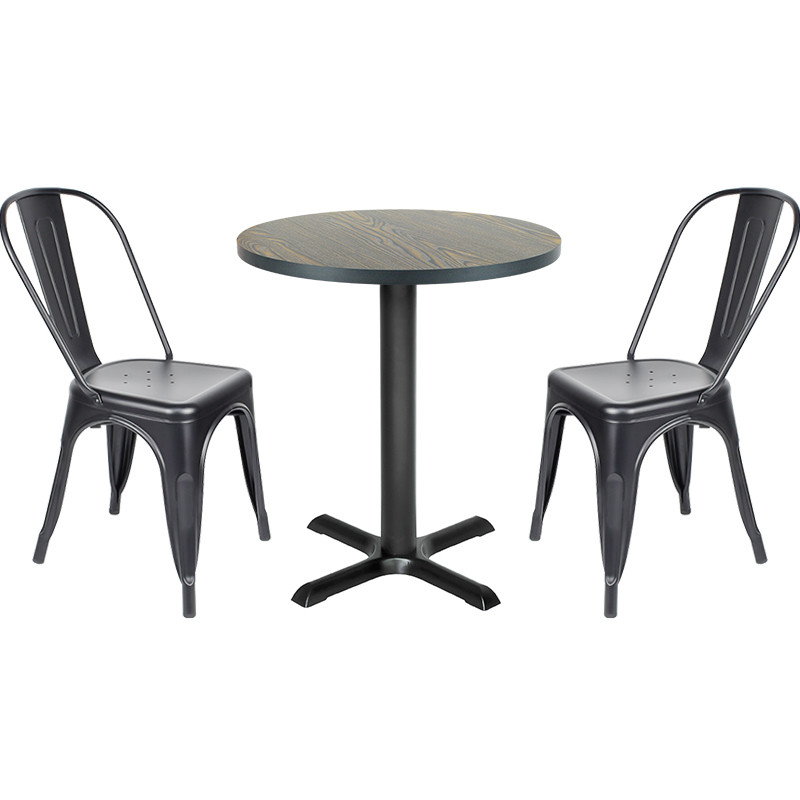
OEM vs White Label vs Branded: Table Leg Sourcing Options for Restaurant Wholesalers
Market Insight | June 11, 2026
Restaurant table bases wholesale buyers have three distinct sourcing models available. Each model has different implications for product exclusivity, margin potential, inventory requirements, and supplier relationships.
This market insight explains each model and provides a framework for wholesalers to select the right approach for their business stage.
The Three Models Defined
| Factor | Branded | White Label | OEM |
| Product exclusivity | None (competitors sell same) | Low (similar products available elsewhere) | High (your design, your spec) |
| Minimum order quantity | Low (100+ units) | Low-Medium (300+ units) | Medium-High (500-1,000+ units) |
| Upfront development cost | $0 | $0 - $500 (packaging design) | $2,000 - $10,000 (tooling, samples) |
Per-unit cost | Highest | Medium | Lowest (at volume) |
Margin potential | Lowest | Medium | Highest |
Time to market | Immediate | 2-4 weeks | 8-16 weeks |
Supplier switching cost | Low | Low-Medium | High |
Brand building value | Low (manufacturer’s brand) | Medium (your brand on generic product) | High (your brand, your design) |
Model 1: Branded (Reselling Manufacturer’s Brand)
Best for: New wholesalers testing market demand, low capital investment, or filling product gaps.
How it works:
Purchase AEONTI-branded table legs
Resell under original brand name
Manufacturer handles design, quality, warranty
Pros:
No product development cost or time
Low minimum order quantity
Manufacturer provides marketing materials
Easy to switch suppliers if needed
Cons:
Competitors can sell identical products
Price competition erodes margin
No brand loyalty built for wholesaler
Customers can bypass wholesaler and buy direct
Margin reality for branded: Wholesale margin typically 15-25%. Online price transparency makes it difficult to charge more than competitors.
When branded makes sense:
First year of wholesale business
Testing demand for a new product category
Filling a one-off customer request
Cash-constrained operation
Model 2: White Label
Best for: Established wholesalers with customer base who want their own brand without custom product development.
How it works:
Purchase unbranded or minimally branded table legs from AEONTI
Apply your own label, packaging, and marketing
Product remains manufacturer’s standard design
Typical white label scope:
Custom packaging (printed boxes, labels)
Removal of manufacturer’s branding from product
Custom instruction manual
Your warranty documentation
Pros:
Product development cost near zero
Faster than OEM (2-4 weeks vs 8-16 weeks)
Builds your brand identity
Customers see you as the manufacturer
Higher margin than branded (typically 30-45%)
Cons:
Product not exclusive (others can sell similar)
Need volume to justify custom packaging MOQs
Still competing on features, not uniqueness
Supplier change means redoing packaging
Margin reality for white label: Wholesale margin typically 30-45%, depending on packaging investment and volume.
When white label makes sense:
Have established customer base but not ready for OEM
Want brand recognition without engineering investment
Standard products meet customer needs
Testing whether customers respond to your brand
Model 3: OEM (Original Equipment Manufacturing)
Best for: Mature wholesalers seeking competitive advantage through product differentiation.
How it works:
AEONTI manufactures exclusive designs to wholesaler’s specifications
Wholesaler owns the design (or has exclusive rights)
Product cannot be sold to other wholesalers
Typical OEM scope:
Unique dimensions (height, base diameter, mounting pattern)
Exclusive finish colors (cannot be sold to others)
Proprietary mounting interface
Custom packaging with wholesale lock
Your brand cast into the product (not just sticker)
Pros:
Complete product exclusivity
No direct price comparison with competitors
Highest margin potential (50%+)
Builds real brand value
Customers cannot easily switch suppliers
Cons:
Significant upfront investment ($2,000-$10,000+)
Higher MOQ (500-1,000+ units)
Longer lead time (8-16 weeks to first delivery)
Harder to switch suppliers (design locked to manufacturer)
Margin reality for OEM: Wholesale margin typically 50-70%, depending on volume and exclusivity.
When OEM makes sense:
Have proven demand for table legs (500+ units/year)
Competing primarily on product features, not price
Need to prevent customers from comparison shopping
Building a brand for long-term value
Transition Path: How Wholesalers Move Between Models
Most successful wholesalers follow this progression:
Stage 1: Branded (Months 0-6)
Learn the market with minimum risk
Identify which products sell
Build customer relationships
Stage 2: White Label (Months 6-18)
Transition top-selling SKUs to white label
Introduce custom packaging
Build brand recognition
Stage 3: Selective OEM (Months 18-36)
Develop 2-3 exclusive products for top customers
Test market response to custom designs
Refine based on feedback
Stage 4: Full OEM Portfolio (Year 3+)
Majority of sales from exclusive designs
Brand recognized as manufacturer
Premium pricing achieved
Real-World Wholesaler Examples
Case A: New Wholesaler (Year 1)
Model: Branded
Investment: $5,000 initial inventory
Margin: 20%
Annual revenue: $150,000
Strategy: Test 10 SKUs, find top 3 performers
Case B: Regional Wholesaler (Year 3)
Model: White label on 20 SKUs + branded on 50 SKUs
Investment: $8,000 packaging, $30,000 inventory
Margin: 35% (white label), 20% (branded)
Annual revenue: $800,000
Strategy: Build brand while expanding selection
Case C: National Wholesaler (Year 5)
Model: OEM on 12 exclusive designs + white label on 30 SKUs
Investment: $75,000 tooling + inventory
Margin: 55% (OEM), 35% (white label)
Annual revenue: $3,200,000
Strategy: Differentiate with exclusivity; white label for price-sensitive segment
Decision Framework for Wholesalers
Question 1: How much capital can you invest upfront?
Under $10,000 → Branded or White Label (minimum packaging)
$10,000-$50,000 → White Label (full packaging) or limited OEM (1-2 products)
Over $50,000 → Full OEM program
Question 2: How many units do you expect to sell in Year 1?
Under 500 units → Branded
500-2,000 units → White Label
Over 2,000 units → OEM (at least on top products)
Question 3: Do your customers comparison shop online?
Yes → Need exclusivity (OEM or at least white label)
No → Branded may be sufficient
Question 4: How important is your brand name?
Not important (transactional sales) → Branded
Somewhat important → White Label
Very important (building long-term value) → OEM
Question 5: How quickly do you need products?
Within 2 weeks → Branded only
Within 4-6 weeks → White Label possible
Can wait 8+ weeks → OEM possible
AEONTI’s Support for All Three Models
AEONTI serves wholesalers at every stage:
Model AEONTI Support
Branded In-stock products, marketing images, specification sheets
White Label Unbranded products, custom packaging design assistance, label application
OEM Engineering, tooling, exclusive production, NDA, design ownership transfer
Next Steps for Wholesalers
Assess your current stage using the progression framework above
Identify your top 3 selling products — these are candidates for white label or OEM
Request quotes for all three models from AEONTI to compare
Start with one product to test the model before full commitment
About AEONTI
AEONTI operates as an OEM table base manufacturer serving wholesalers worldwide. The company supports branded resellers, white label partners, and exclusive OEM programs.